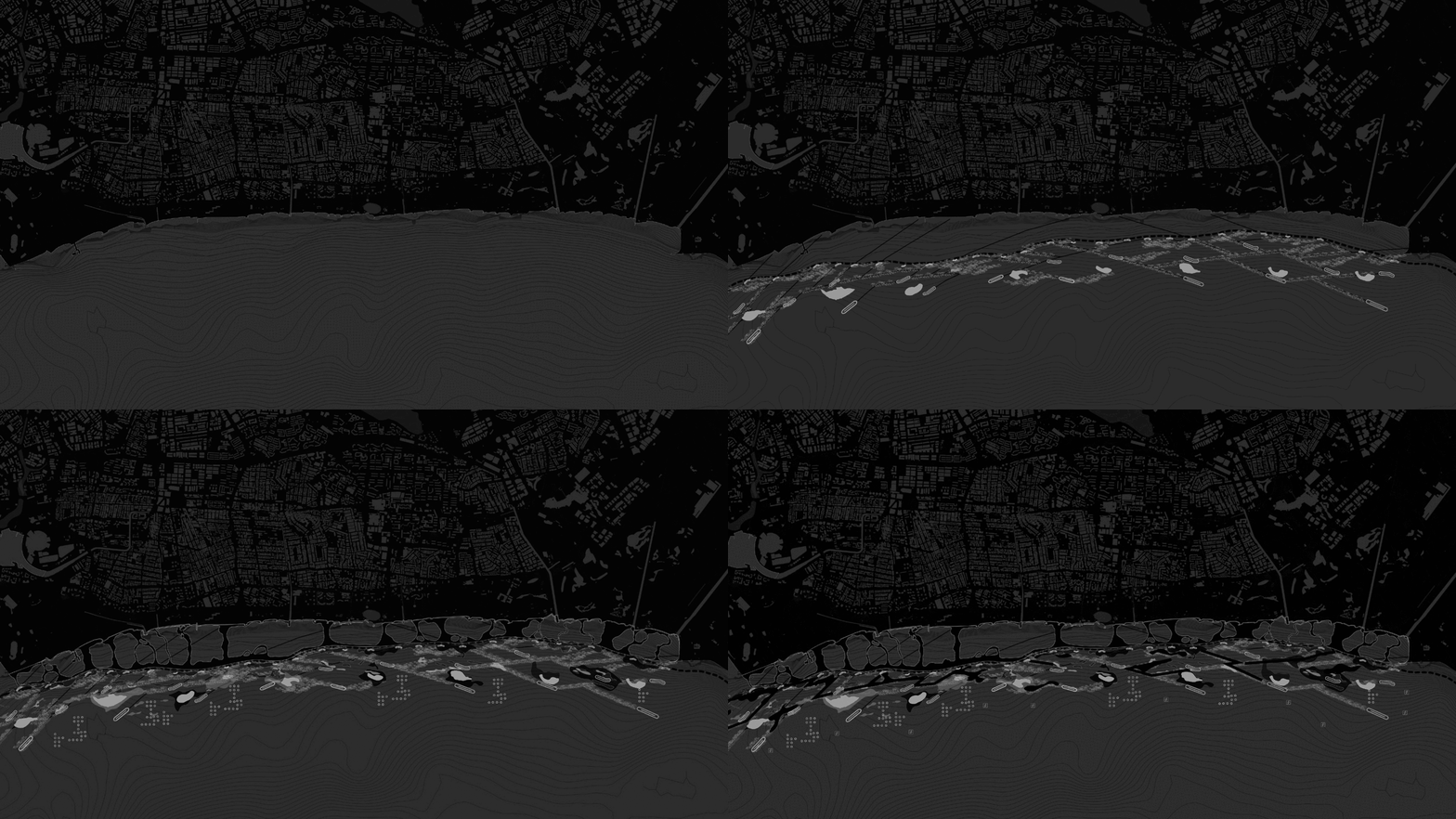
Research on Long Island as part of the Archipelago Agenda — exhibitions at Pratt, Aalto, Anant, and Universidad del Desarrollo.
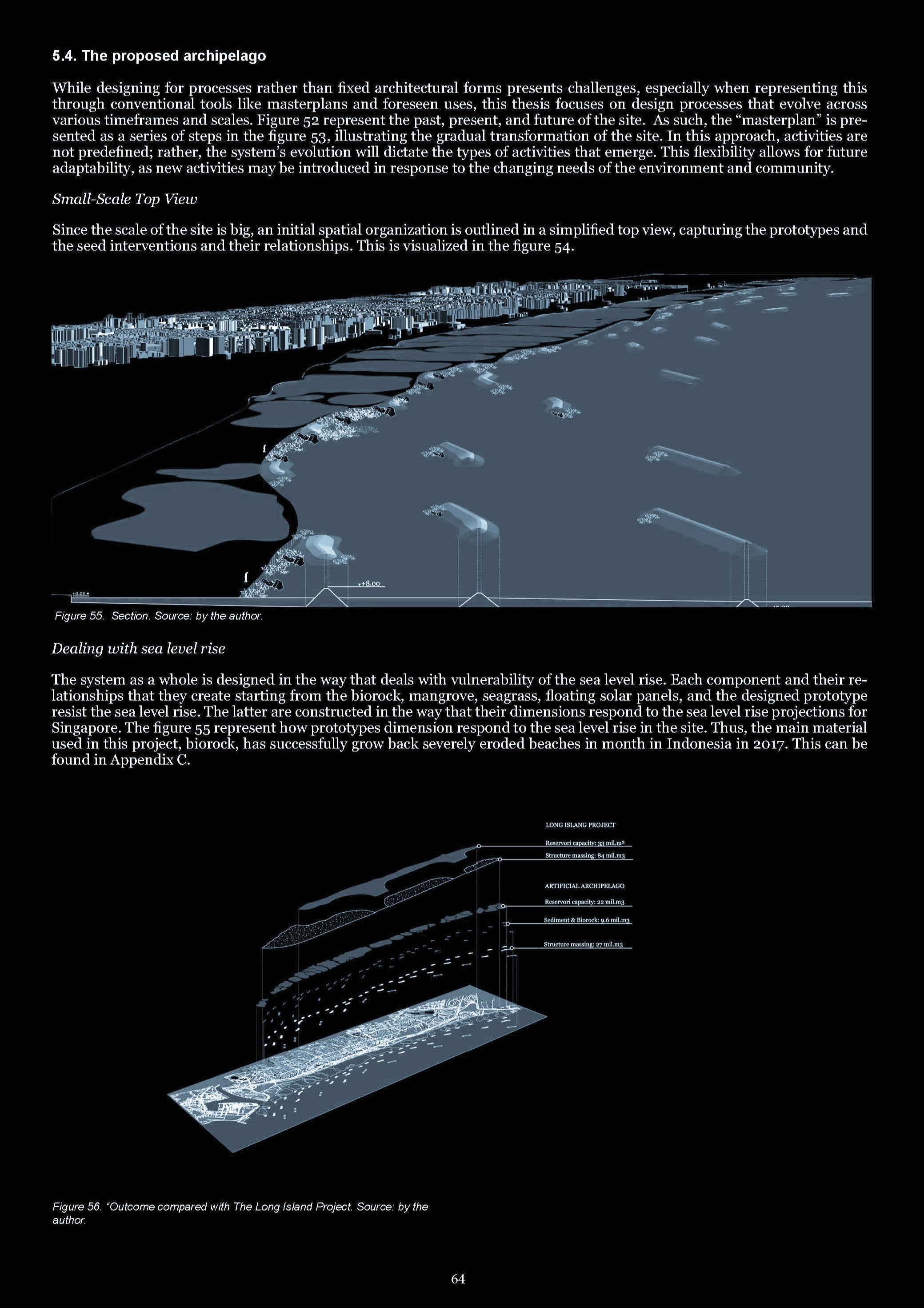
The Long Island Project involves the reclamation of land at higher levels off the East Coast and placing them in the form of "islands" located a distance away from the existing coastline. This project is aimed to help Singapore's effort in coastal protection. Another feature of the project includes the concept of a new reservoir. The reservoir will include two centralized tidal gates and pumping stations, similar to Marina Barrage, which will keep out seawater during high tides and discharge stormwater into the sea during heavy rainfall. The tidal gates and the reclaimed land will form a continuous line of defense along the coast for protection against rising sea levels.
Presently, the Long Island Project remains conceptual and feasibility studies kicked off in 2024.
To explore the evolution of Singapore's coastline beyond that in the initial Long Island proposal, cumulative research beyond the boundaries of the Long Island Project scheme, driven by research by design alluded to the proposal of 3 possible design schemes as alternatives.
Scheme 1 : Archipelagic Ecologies
Singapore University of Technology and Design (SUTD)
In collaboration with: Adelin Johari | Darius Chen | Brayden Tang | Nicholas Lim | Daryl Ho
Advisors : Eva Castro
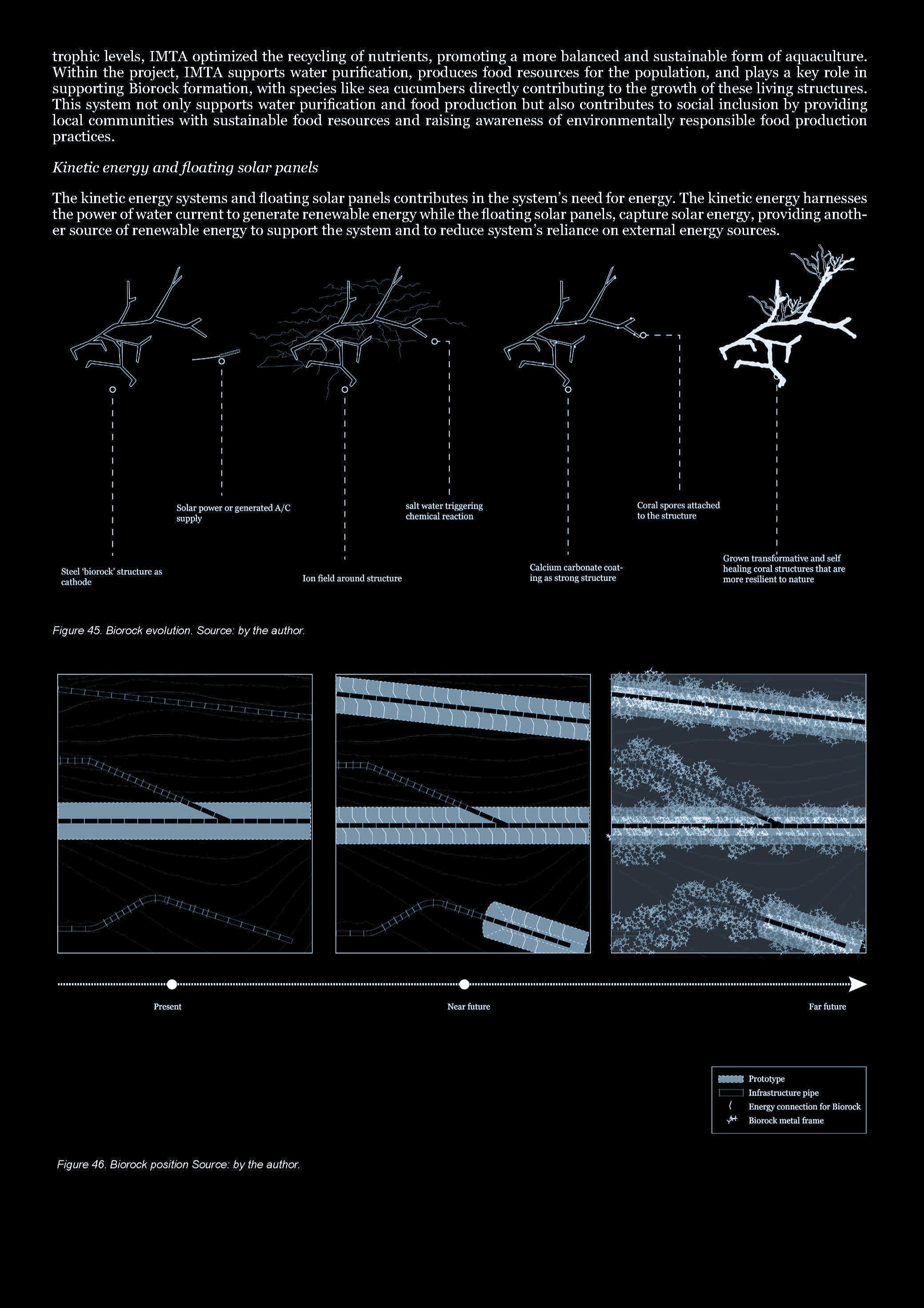
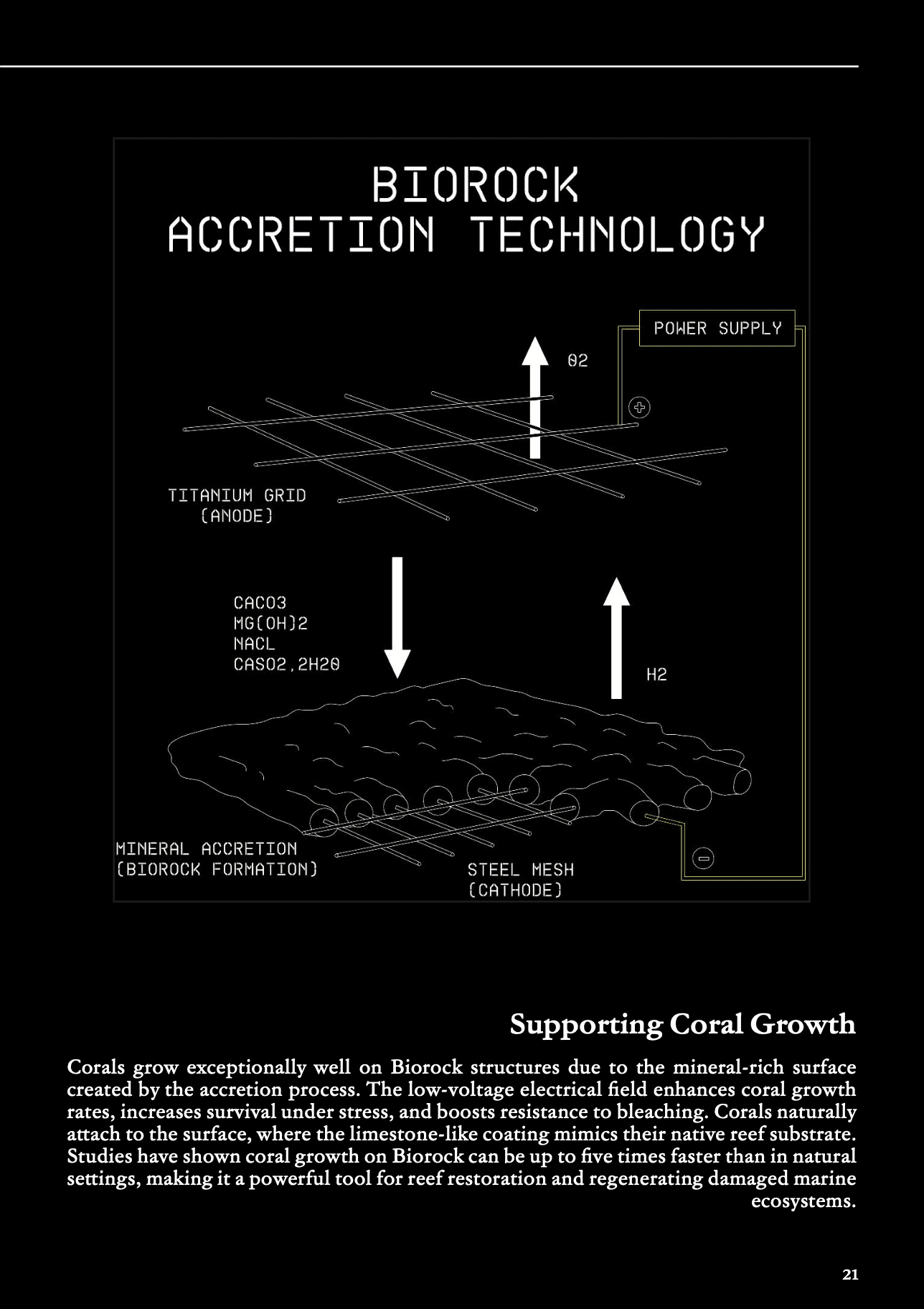
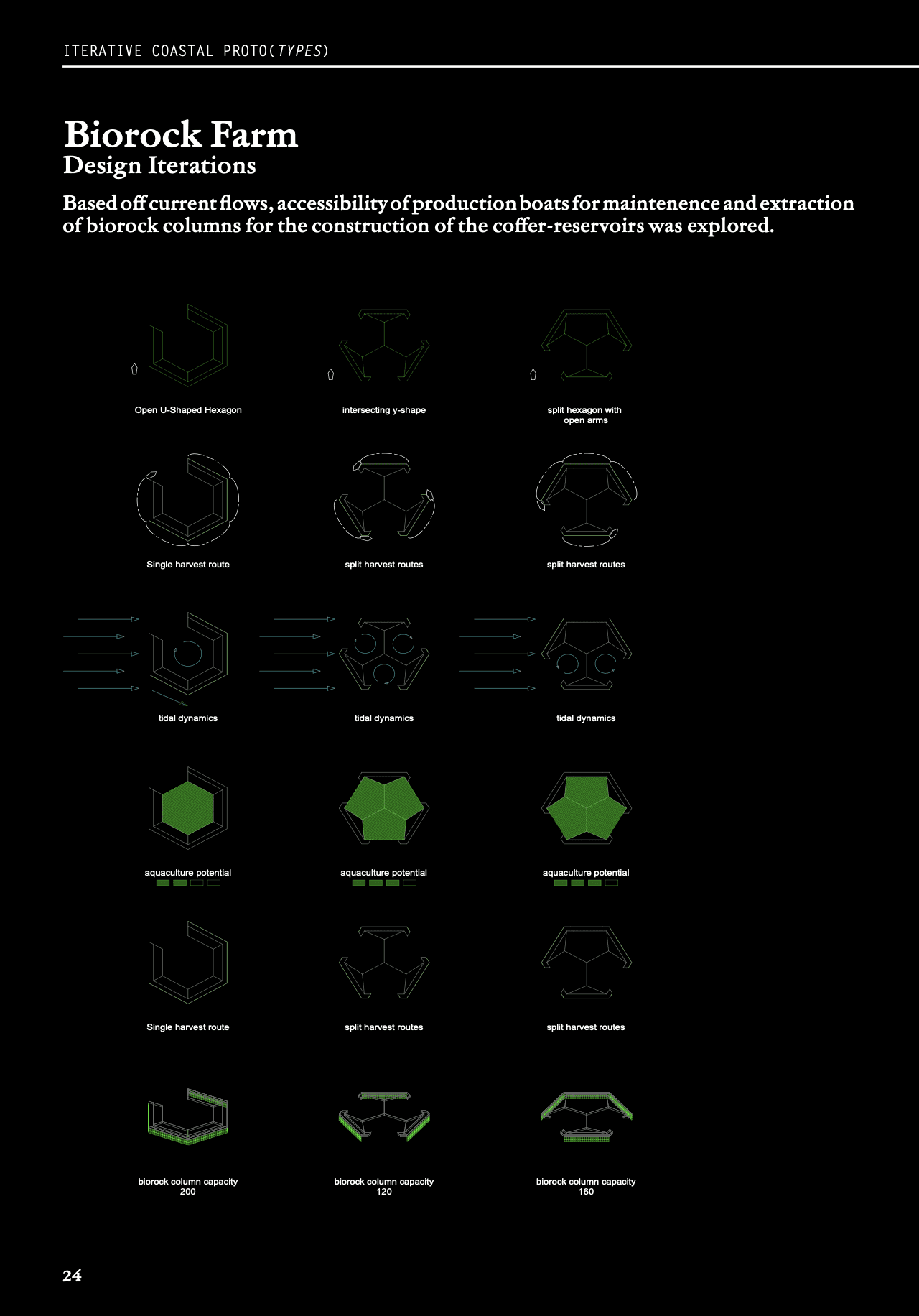
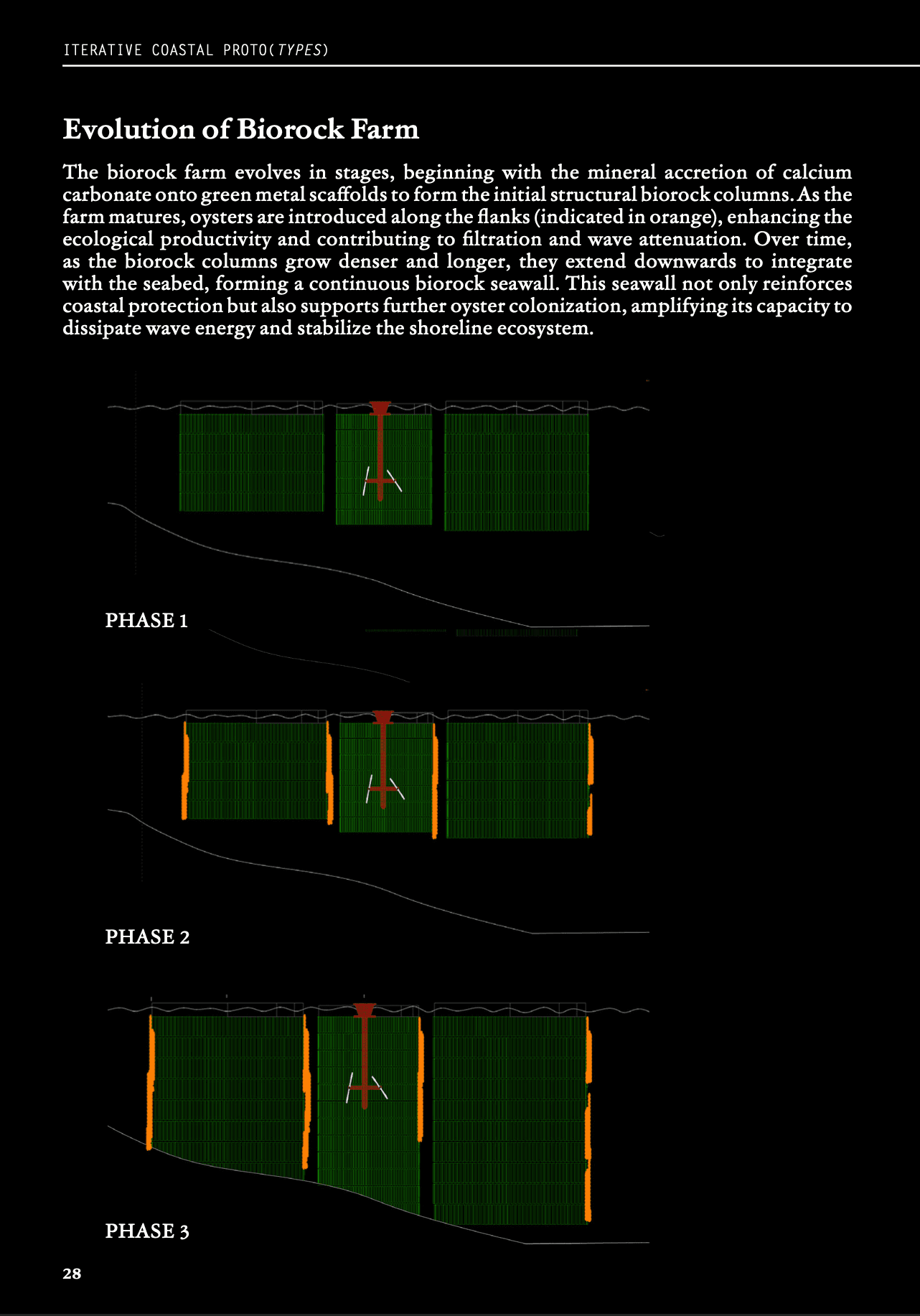
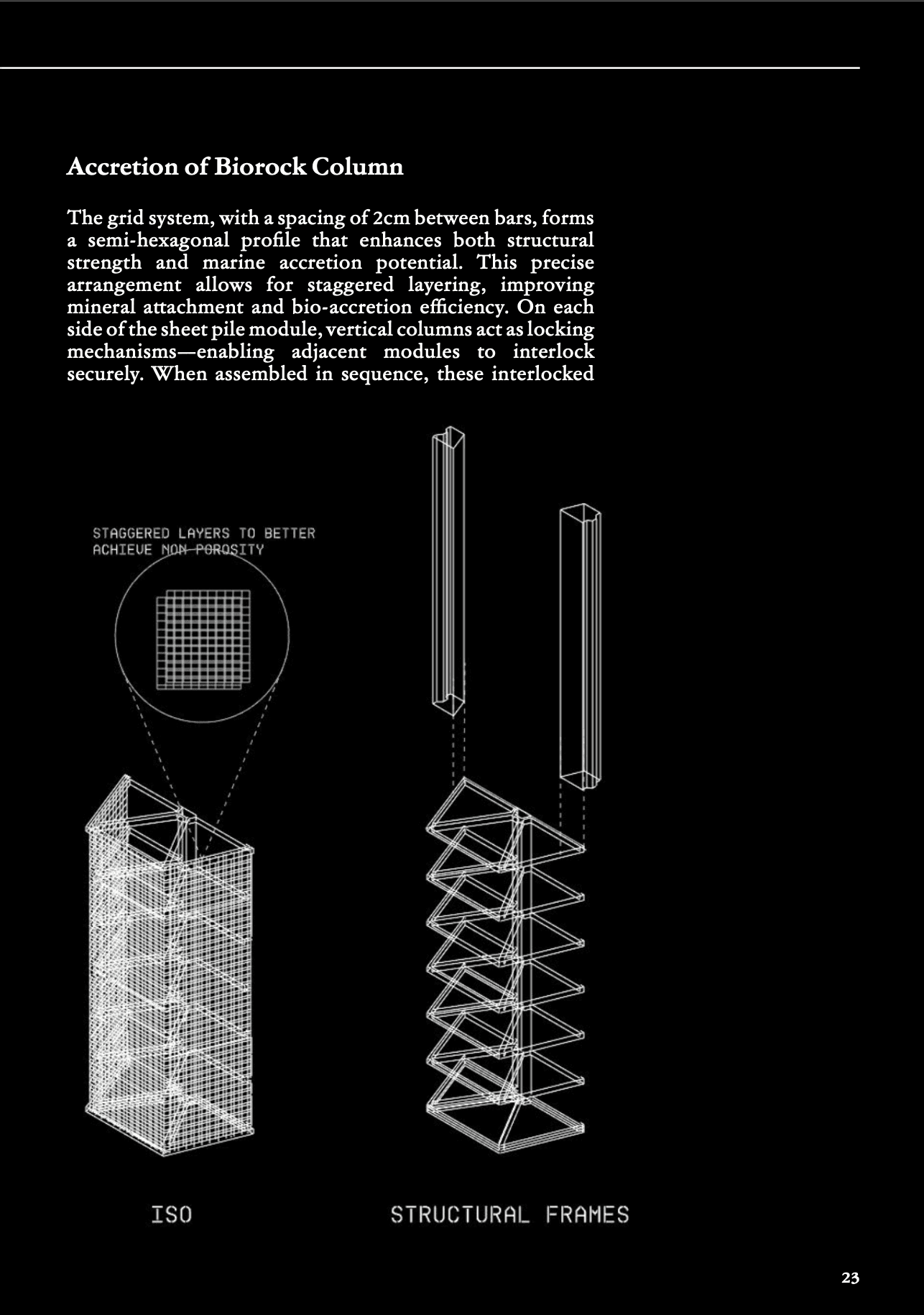
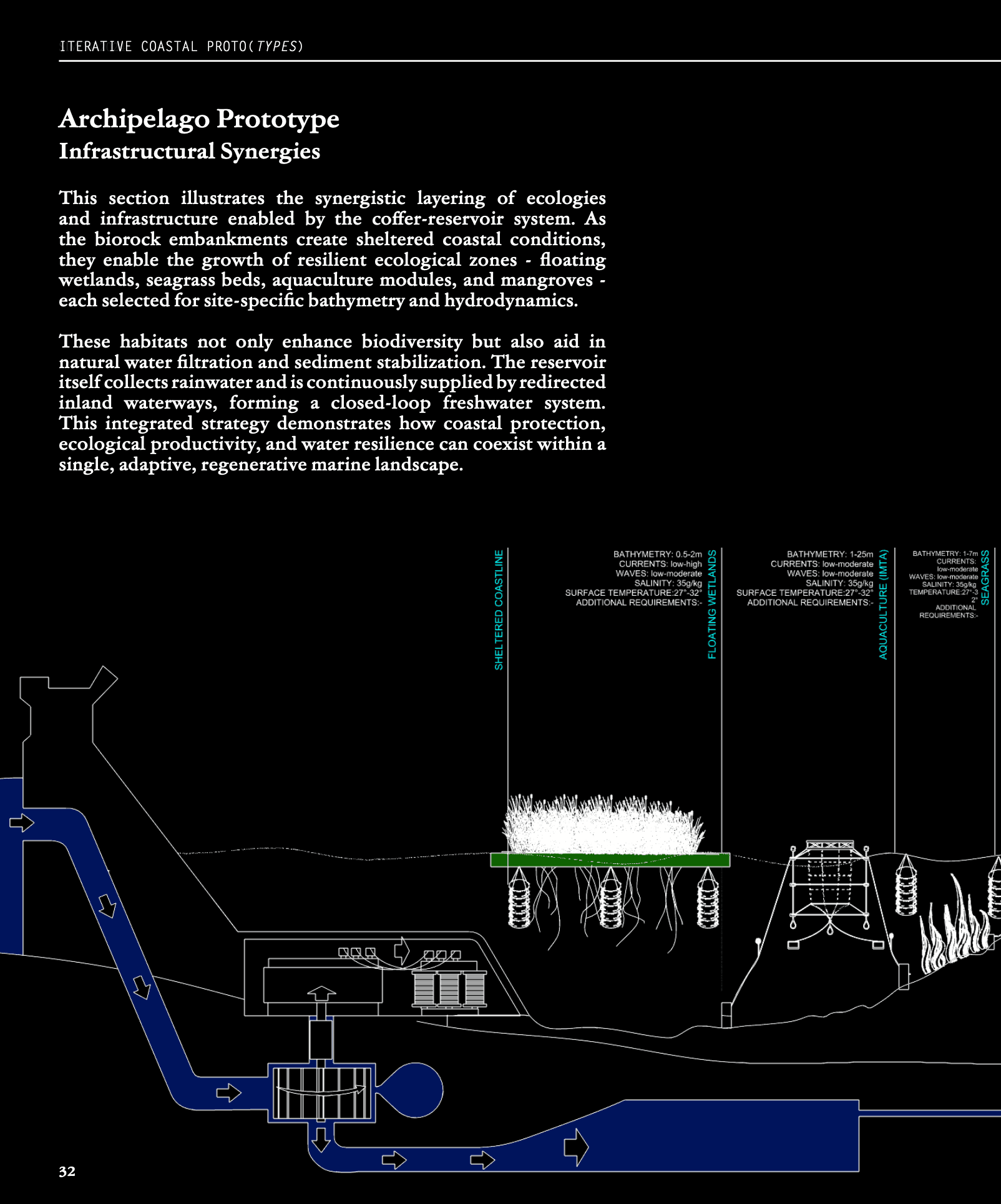
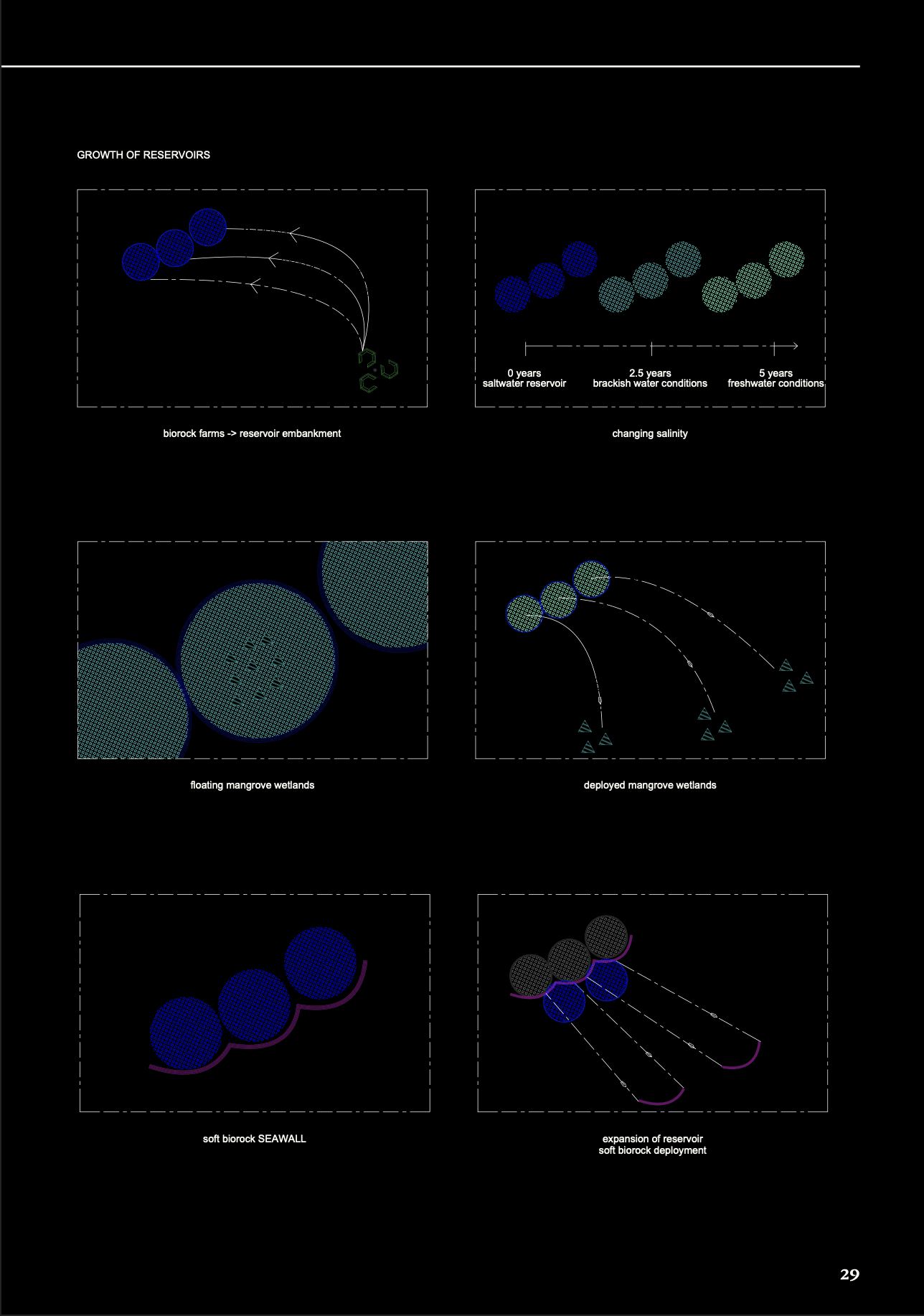
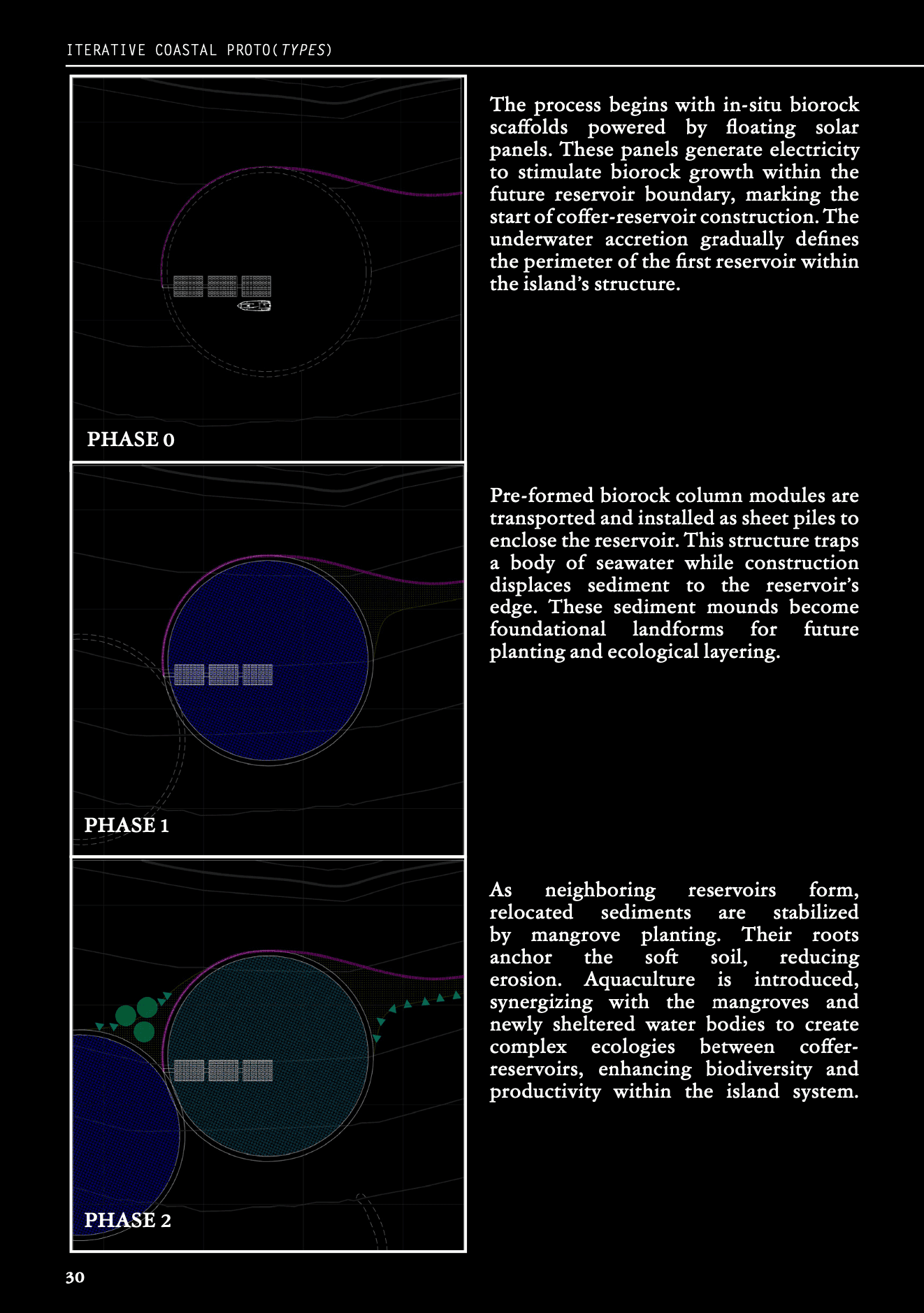
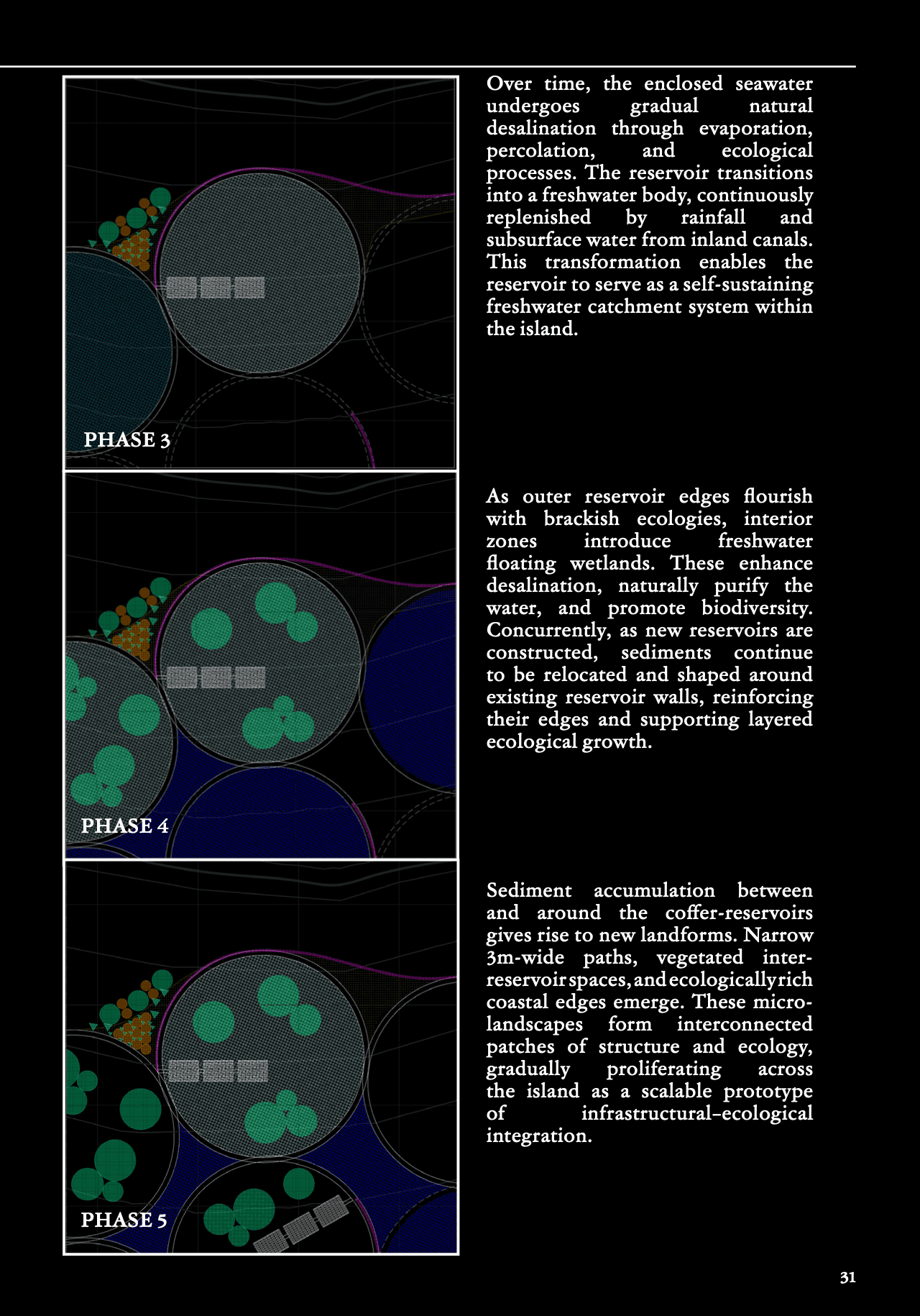
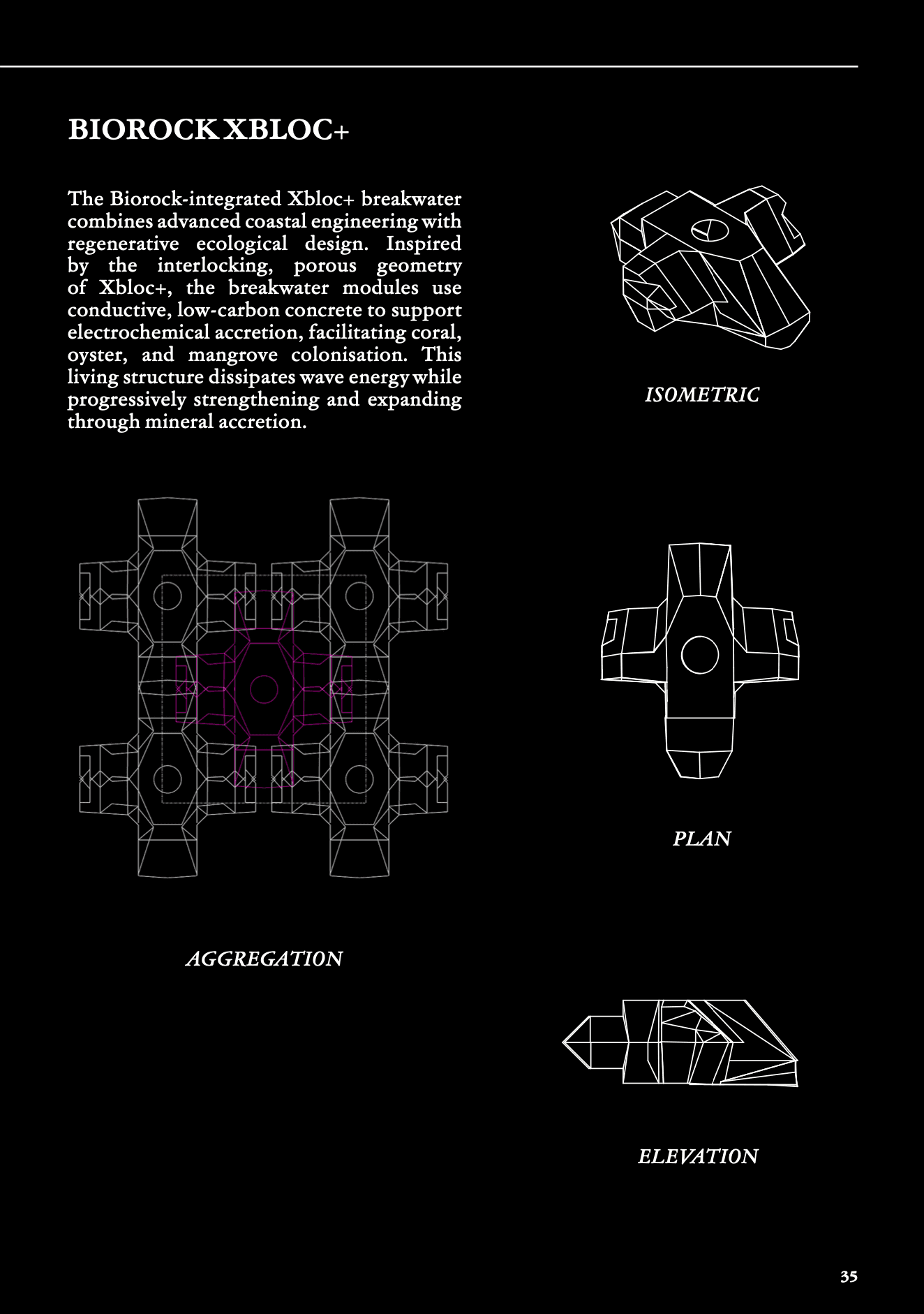
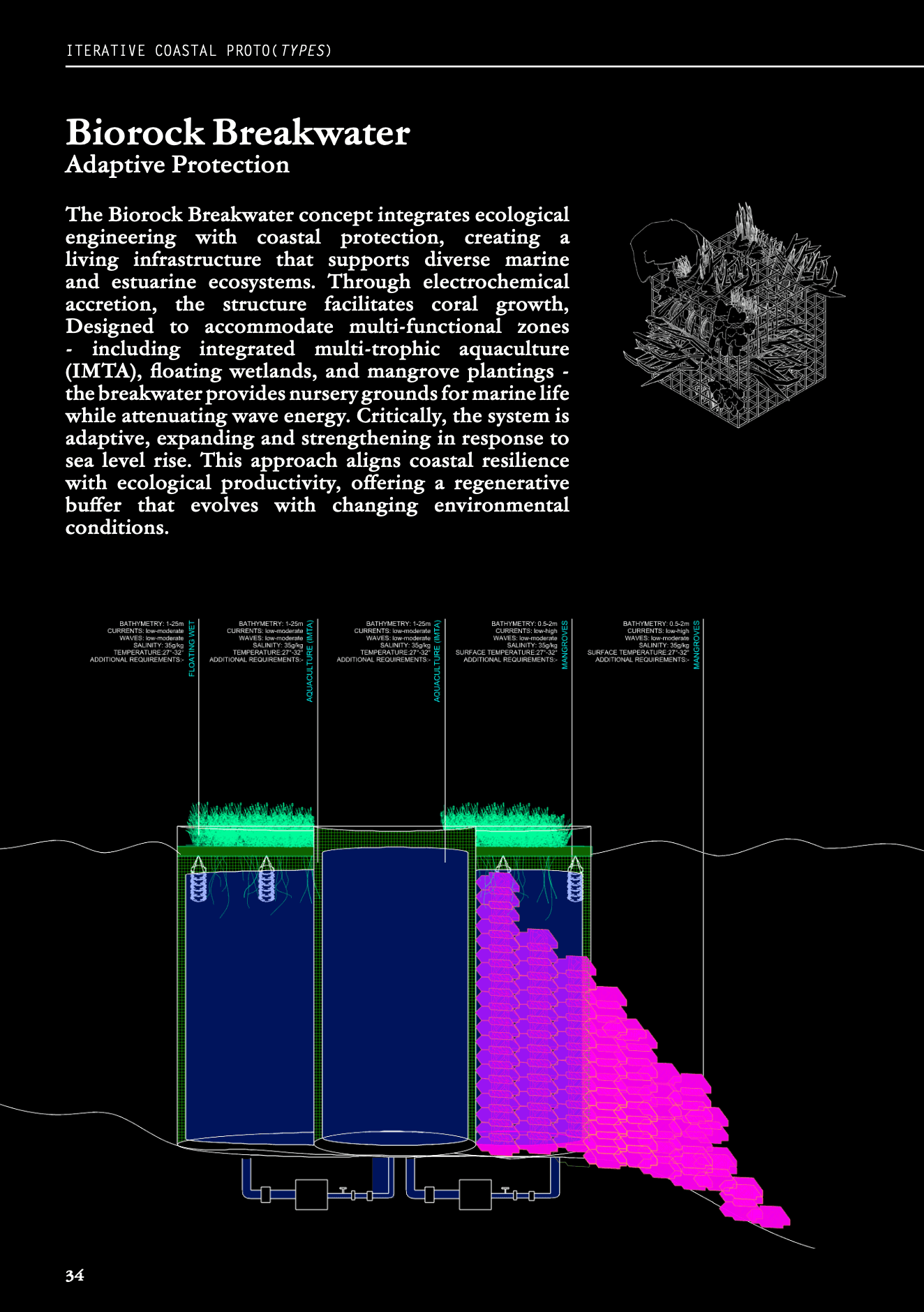
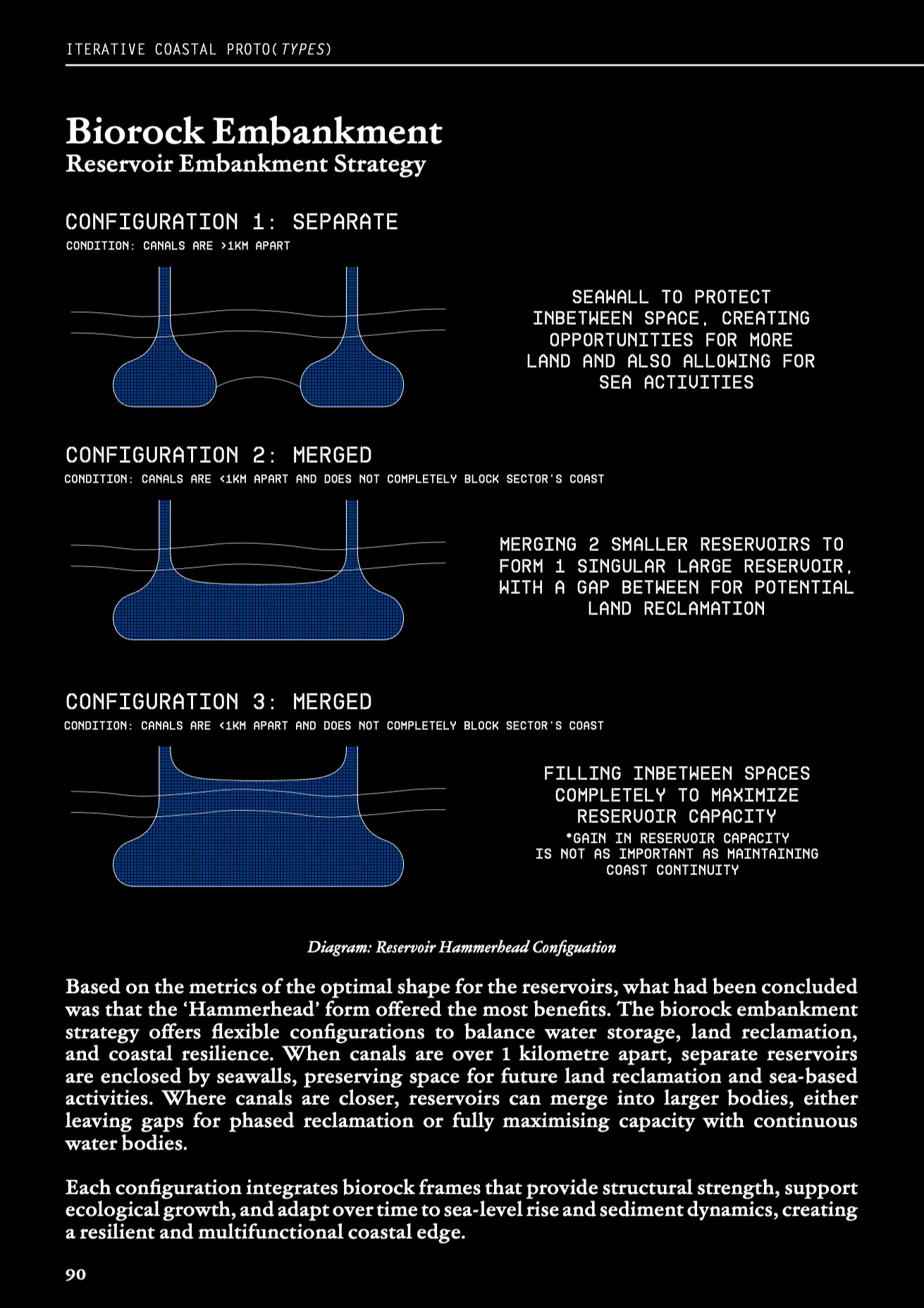
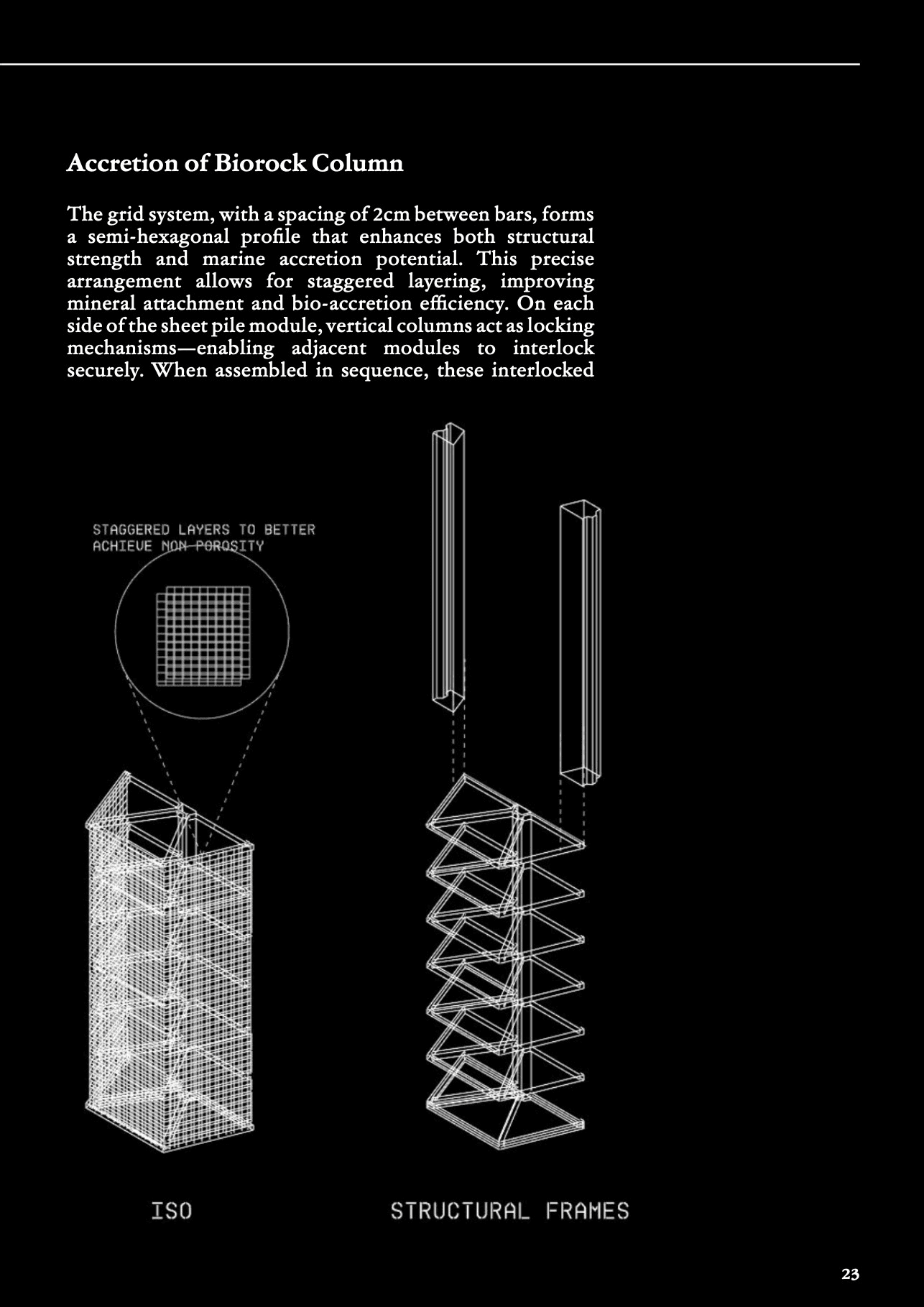
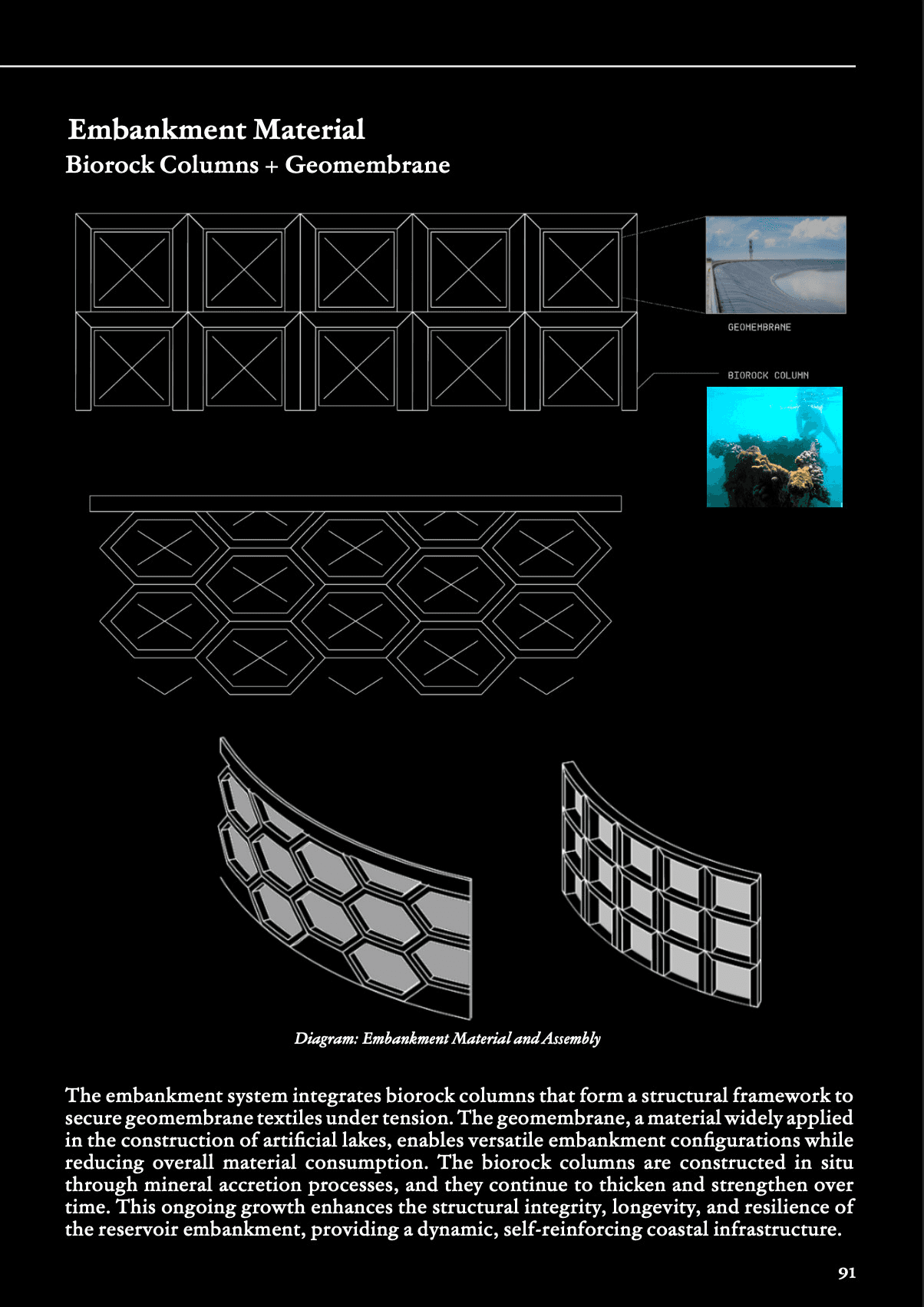
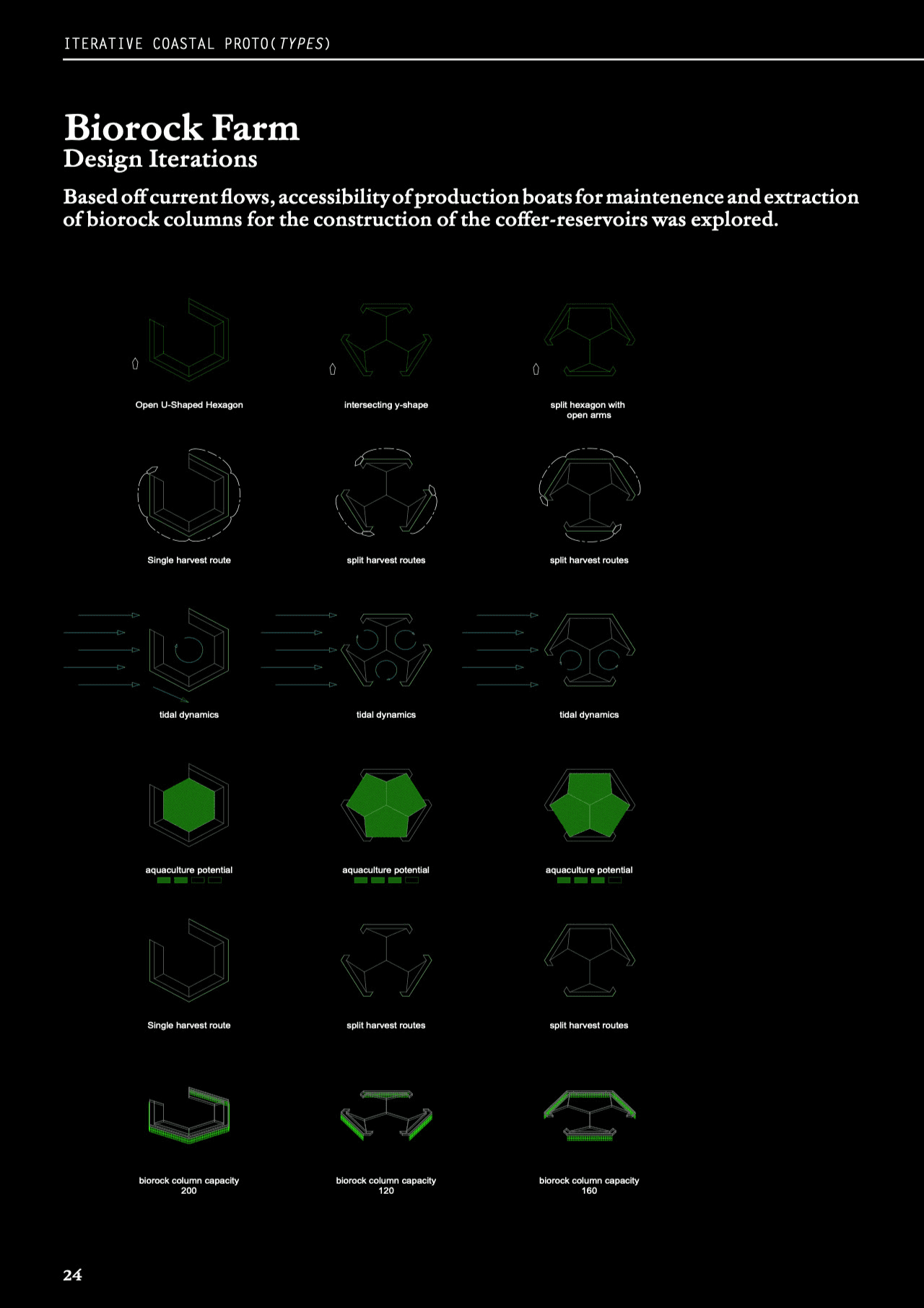
This scheme proposes a dynamic, self-sustaining coastal protection and water-harvesting infrastructure through an evolving archipelagic system. Initiated by offshore biorock farms placed in high-current, deep-sea zones, tidal energy is harvested to stimulate rapid mineral accretion, producing structural biorock components. These are then transported inland to construct modular biorock embankment walls that enclose coffer-reservoirs — artificial islands designed for natural desalination, transforming seawater into usable freshwater over time. As islands multiply outward in layers, they function collectively as wave dissipators and ecological buffers. Interconnected seawalls and tidal gates form a flexible defense spine, designed to accrete vertically in tandem with rising sea levels. The perpetual seeding of biorock, aquaculture, and vegetation transforms the system into a machinic landscape — generating surplus water, food, and construction material for replicable deployment elsewhere. Blurring boundaries between infrastructure and ecology, this territorial strategy redefines coastal resilience as a living, growing, adaptive system rather than a static barrier.

Scheme 2 : Generative Coastlines
Singapore University of Technology and Design (SUTD)
In collaboration with: Darius Chen | Adelin Johari | Brayden Tang | Nicholas Lim | Daryl Ho
Advisors : Eva Castro
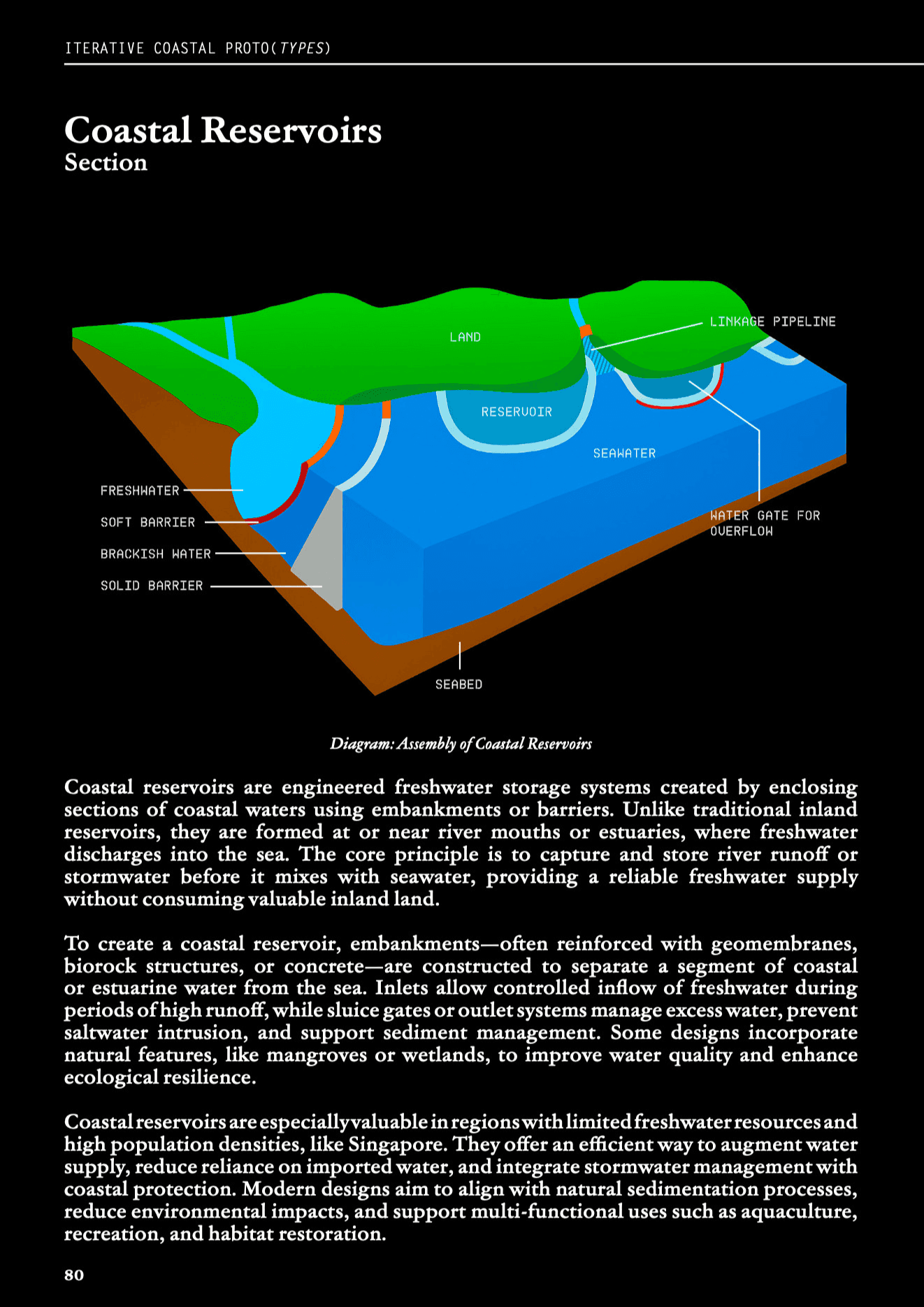
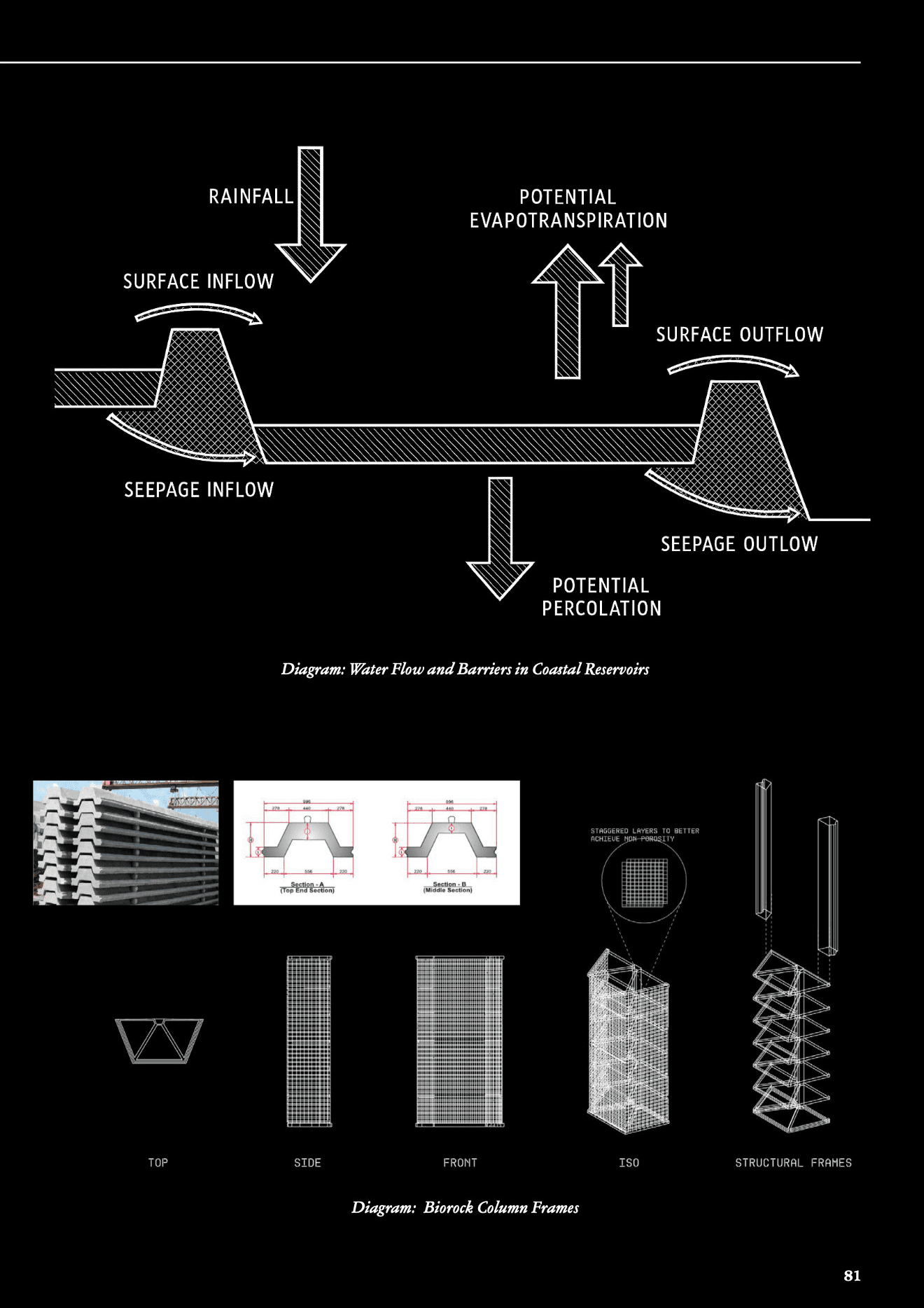
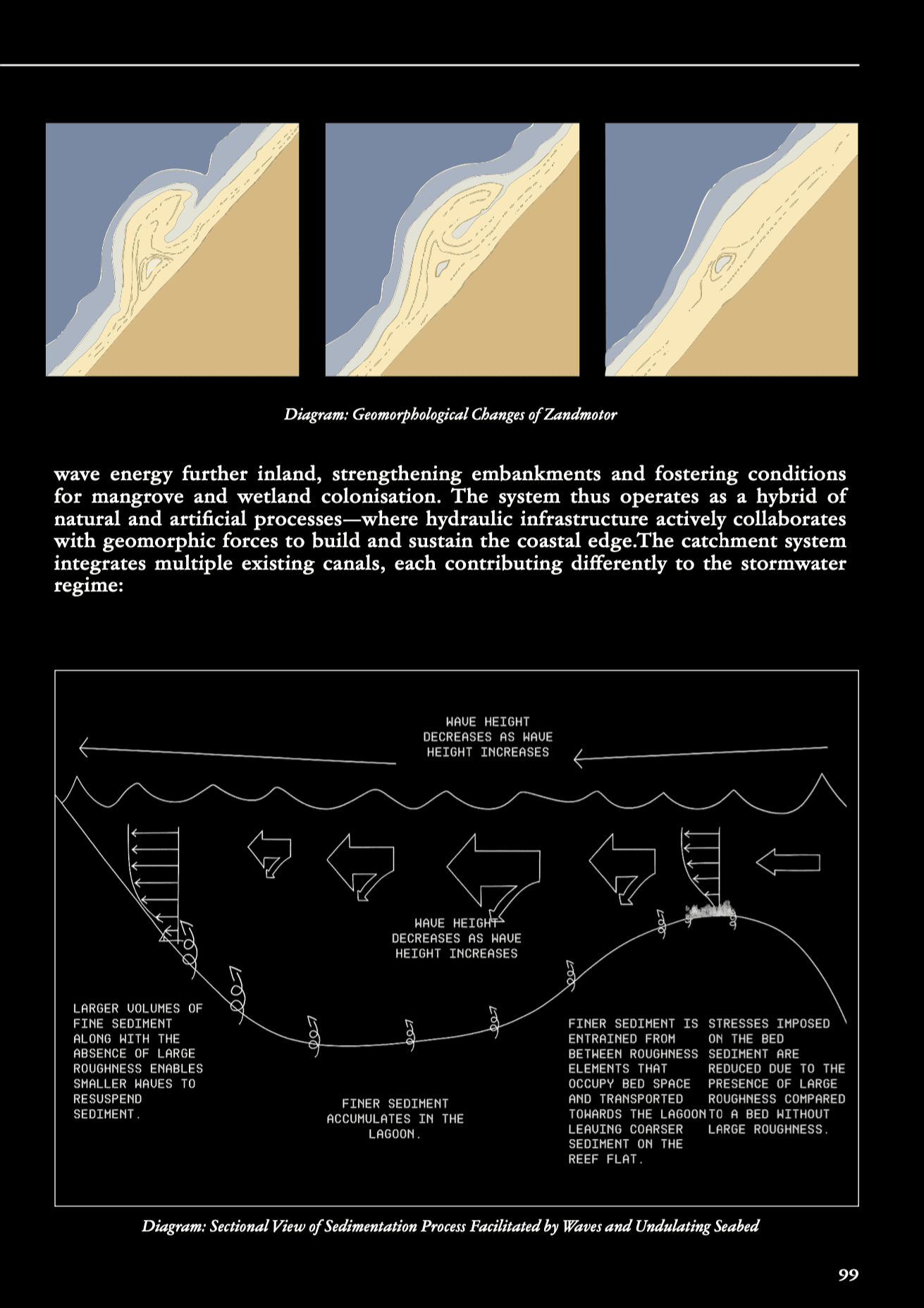
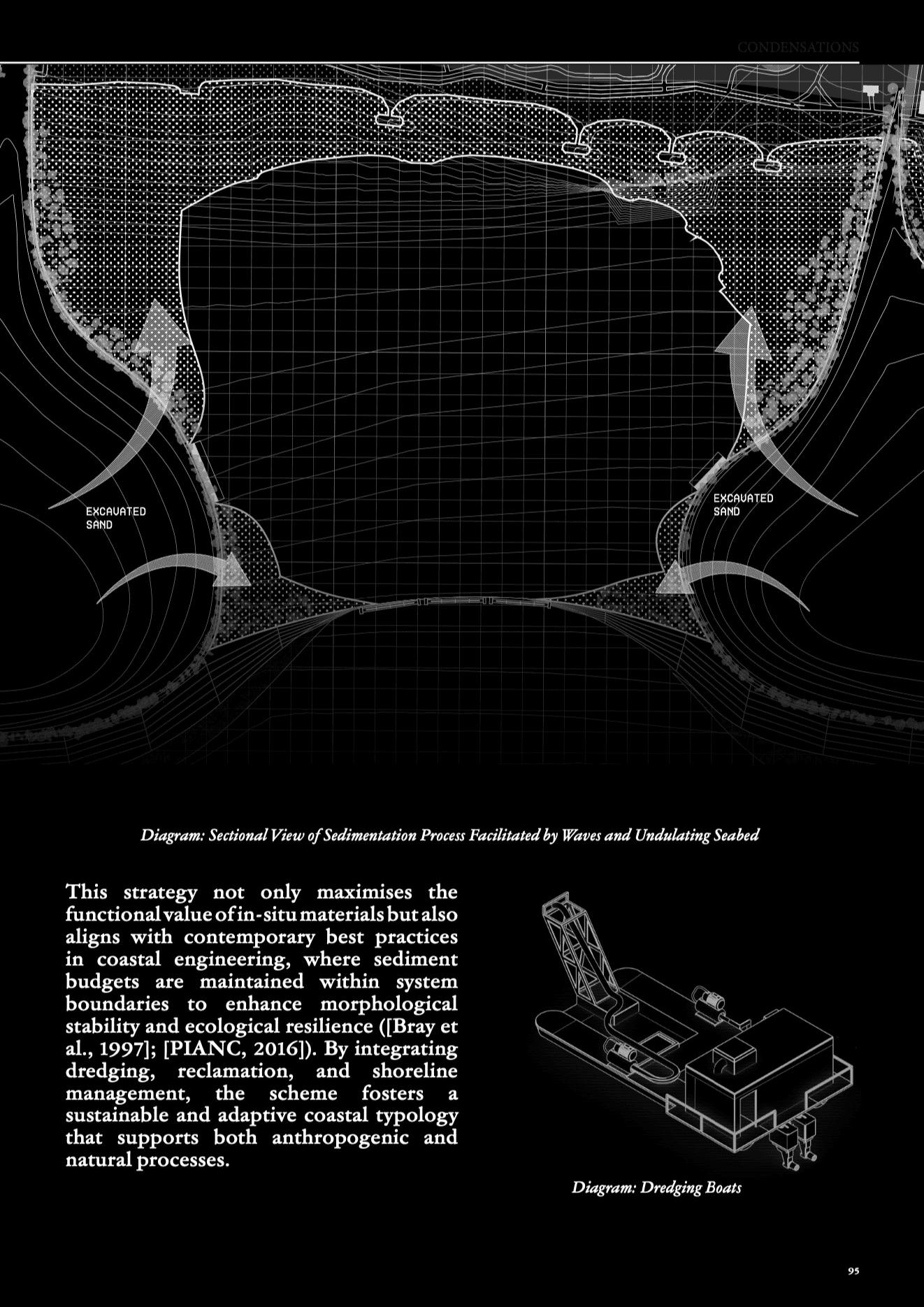
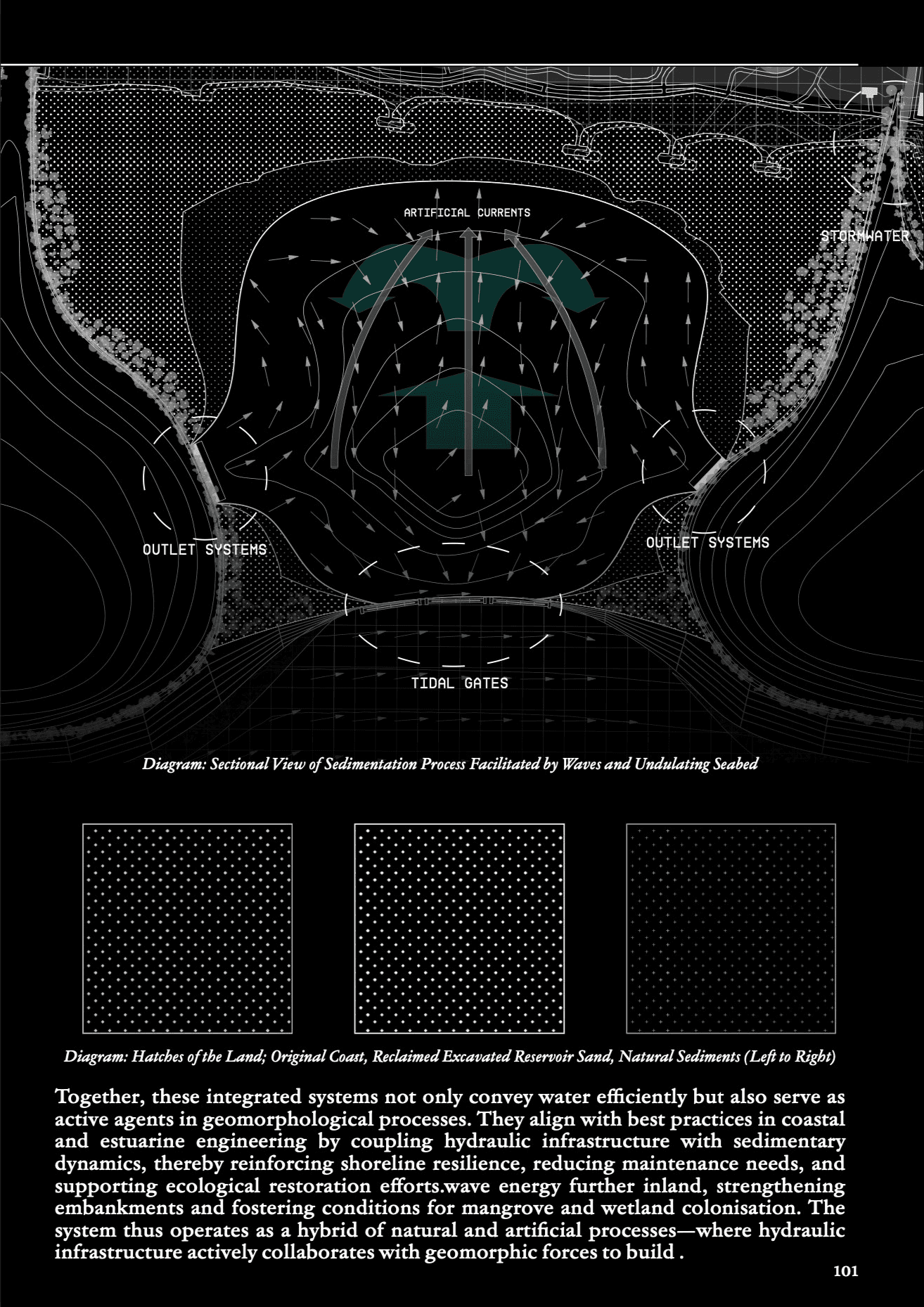
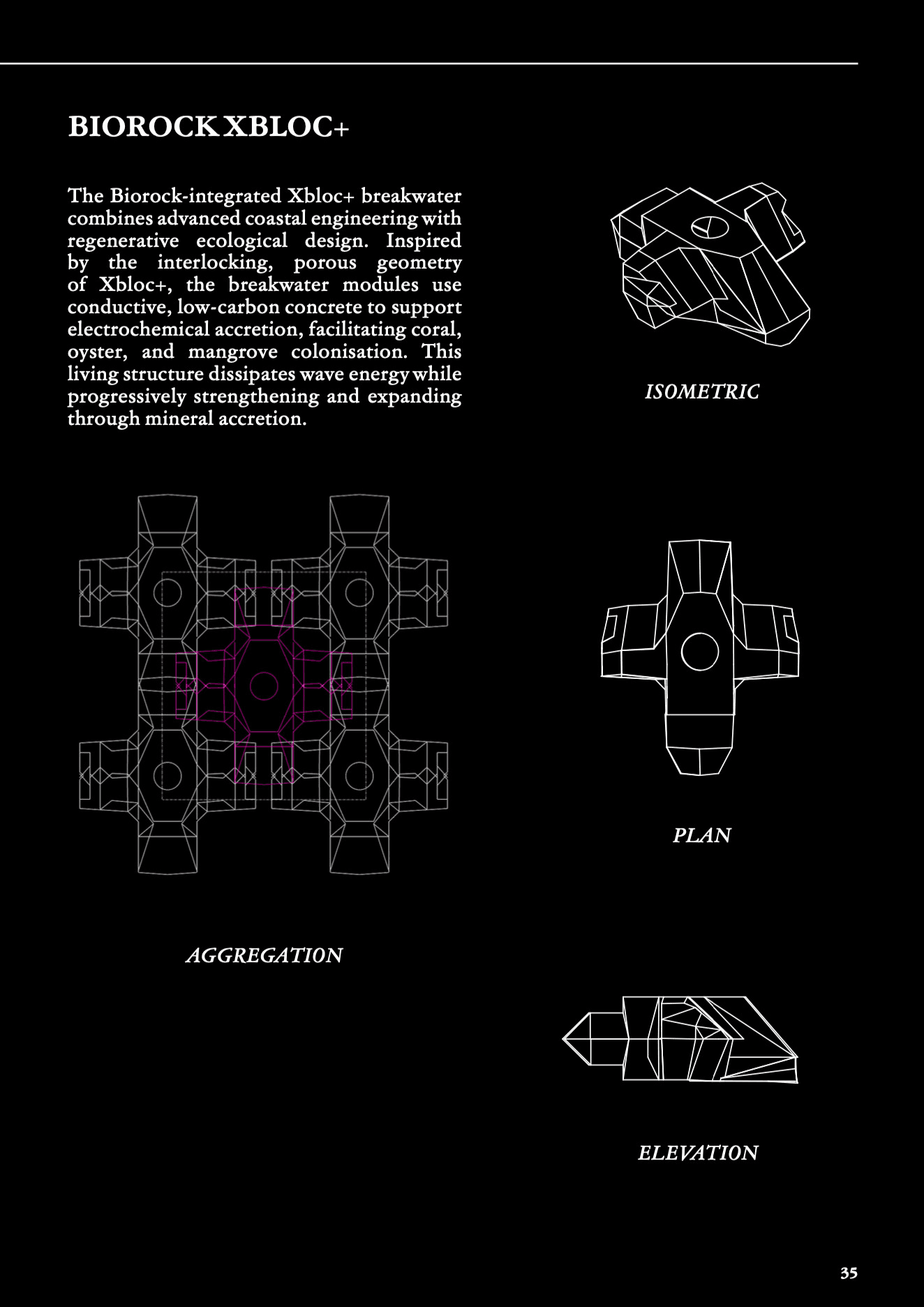
Scheme 2 builds upon and adapts components explored and prototyped in earlier schemes, such as biorock columns, artificial reservoirs, and sediment transport systems. However, it differs through its closer relationship to the existing coast, engaging directly with the coastline's form, identity, and ecological character. Rather than operating at a detached or territorial scale, this scheme seeks to extend the coast where appropriate, carve into selected areas, and most importantly, enrich, protect, and sustain the coastal edge. It combines natural processes like sediment accretion, tidal flow, and ecological succession with essential infrastructural interventions, blending softer ecological strategies with necessary grey infrastructure. The approach reduces reliance on extractive resources by reusing excavated materials for land formation, repurposing functional spaces, and creating multi-layered systems that address hydrological performance, ecological restoration, and public use. Reservoirs, biorock breakwaters, and managed sediment beaches work together to protect the coast against sea-level rise while supporting habitat creation, recreational uses, and productive aquaculture. This summary sets the stage for the project's introduction, presenting a vision of an adaptive and resilient shoreline that integrates natural and infrastructural systems to safeguard and enhance the coastal landscape.

Scheme 3 : Reveries of a Moving Edge
Singapore University of Technology and Design (SUTD)
In collaboration with: Daniel Gradwohl
Advisors : Tina Cerpnjak, Eva Castro, Pia Fricker
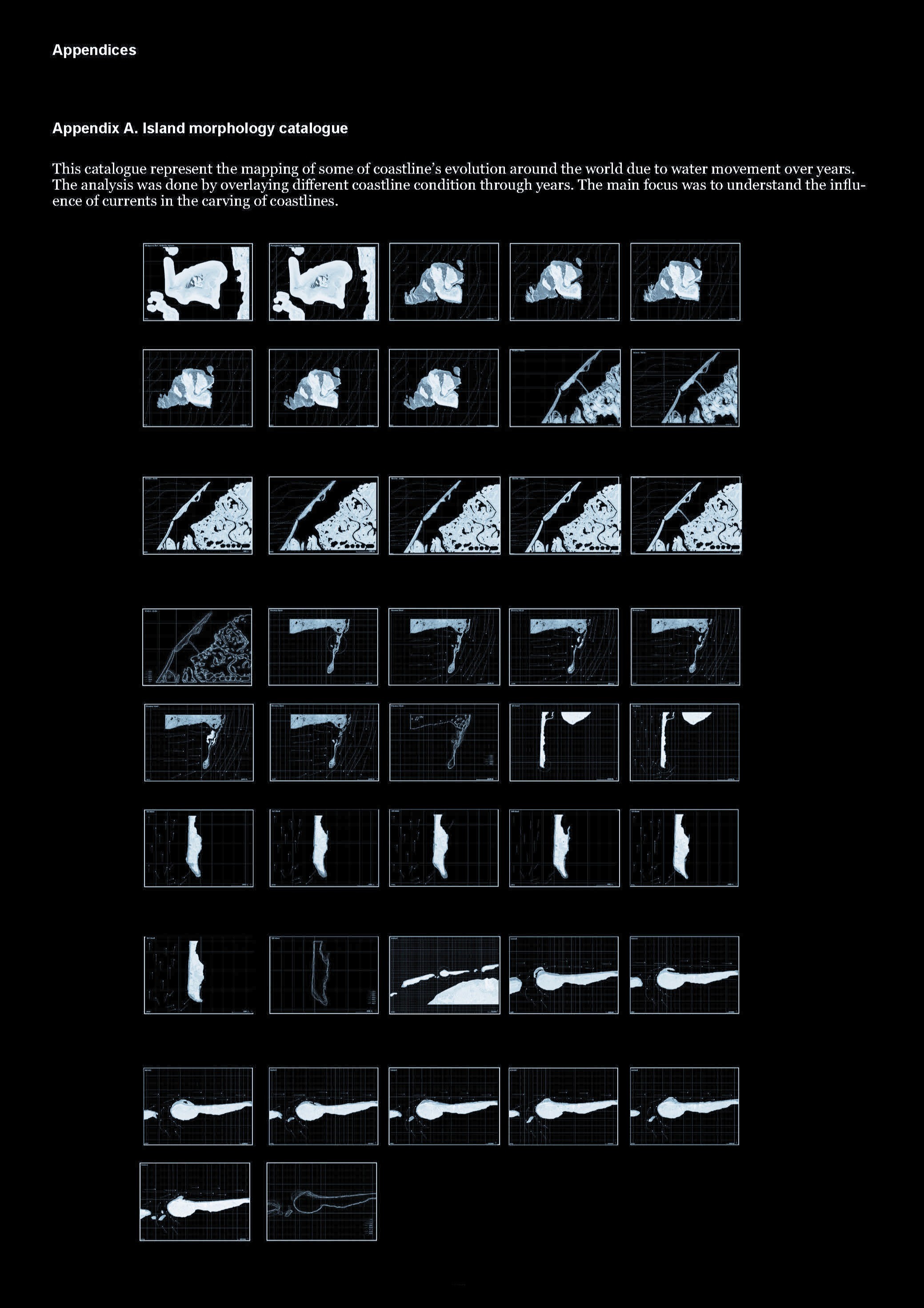
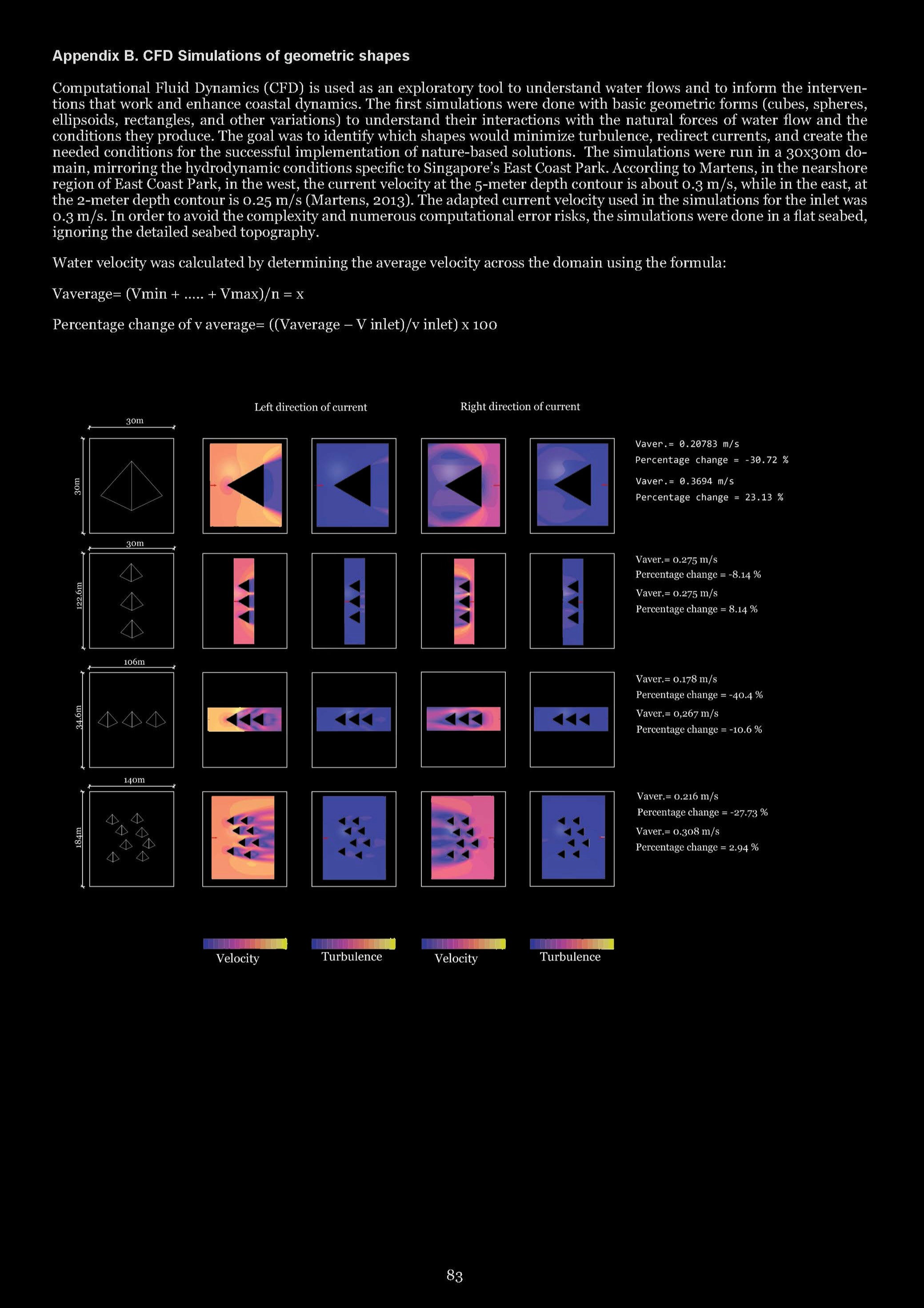
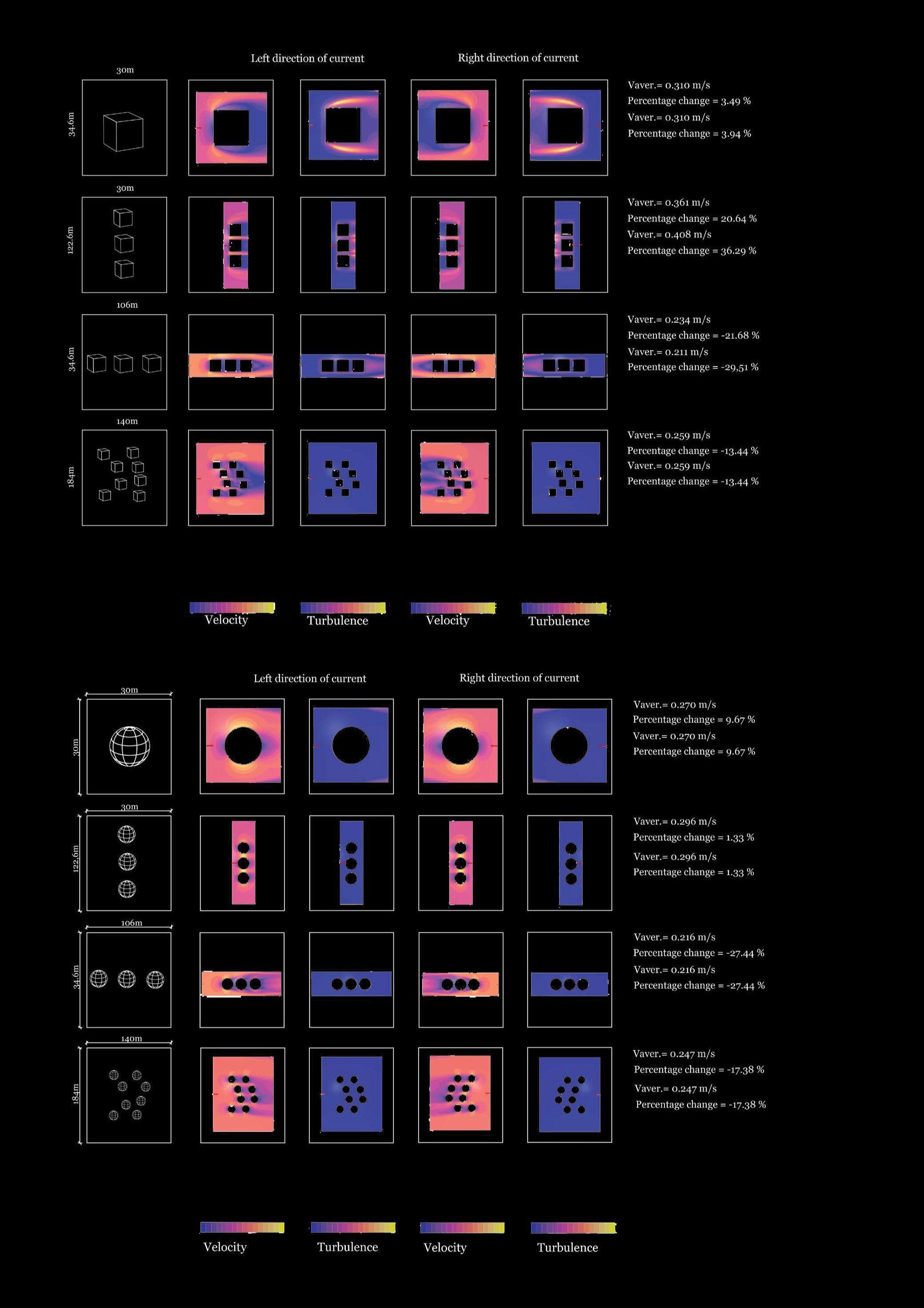
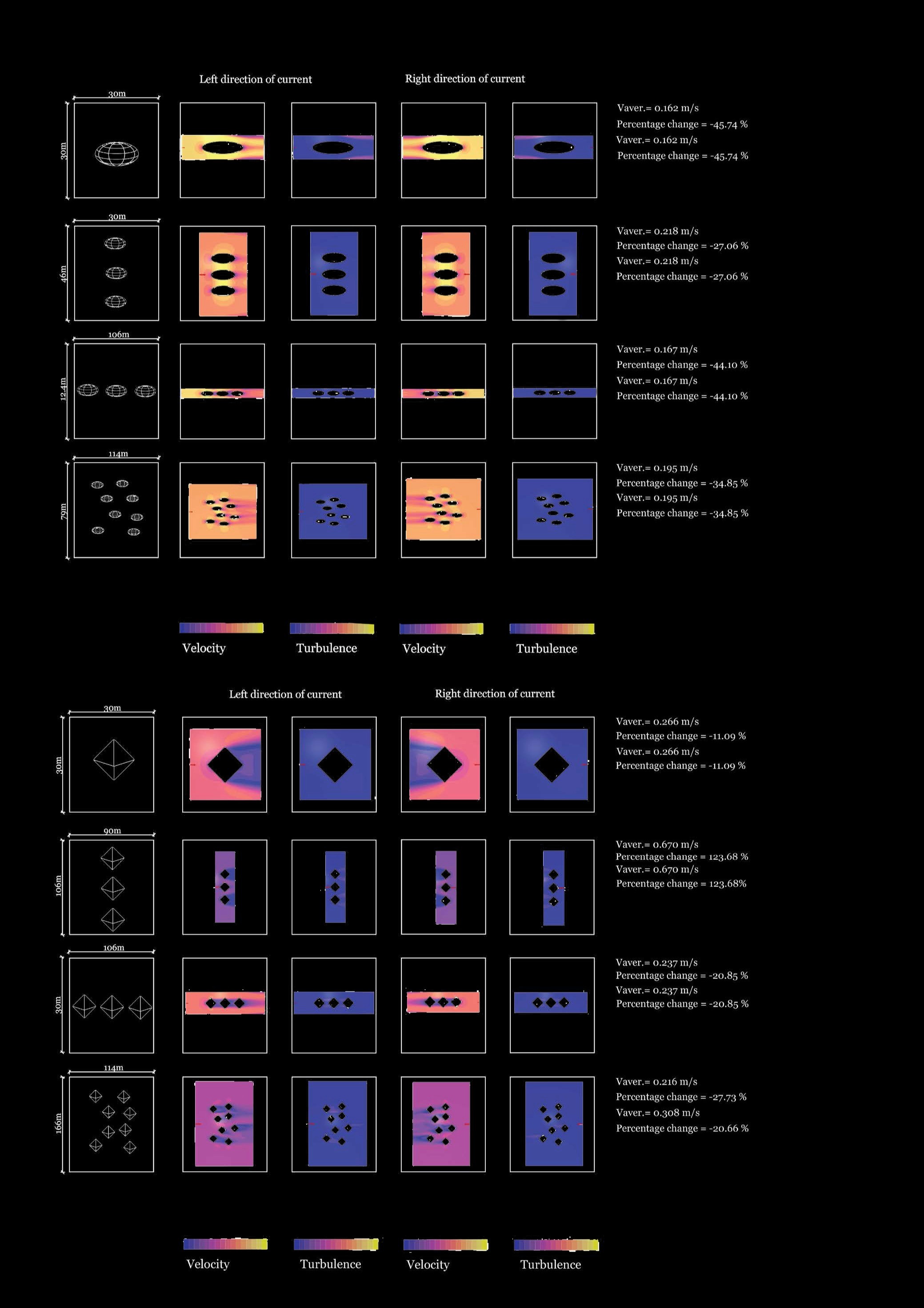
Scheme 3 is rooted in practical, multidisciplinary onsite workshops in Singapore. Collaboration between local stakeholders such as Singapore's National Water Agency (PUB) and other expert firms from around the world with a base in Singapore, including hydrologists and engineers, enriched the design process. Their local knowledge and expertise helped ground the speculative design in the realities of the site, ensuring that the proposed visions are informed by both local insights and technical methodologies. Building on this collaborative approach, the historical development of Singapore's coastline through land reclamation, along with future projects such as the Long Island project, epitomized the dynamic and contested nature of the marine environment. To respond to the dynamics of shifting boundaries, this thesis investigates a holistic approach that co-designs with natural processes, fostering a collaborative process between humans and non-humans. Inspired by Latour's concept of the Middle Kingdom, which transcends borders between nature and culture, the study incorporates computational design methodologies such as Grasshopper and computational fluid dynamics (CFD). Simulations of water movement and the process of form-finding that would best support nature-based solutions were conducted, focusing on dynamic adaptability and considering not just current needs but also future scenarios where time and change are continuous. By adopting a transdisciplinary approach that synthesizes systems thinking and actor-network theory, the study captures the complexity of the coastline as a web of interactions between natural and cultural forces, emphasizing process over permanence. The proposed coastlines challenge traditional notions of fixed boundaries between nature and culture, offering a holistic, adaptable approach and opening novel ways of architectural thinking in design strategies for ever-shifting coastline territories in the face of climate change.