
Shellfish Habitats for Integrated EcoLogical Defence — a PUB Living Lab growing living shellfish reefs to protect Singapore's coast.
S.H.I.E.L.D — Shellfish Habitats for Integrated EcoLogical Defence — is a project funded under PUB’s Coastal Protection and Flood Resilience Research Programme (CFRP) Living Lab initiative, led by the Centre for Climate Adaptation at SUTD. It begins with a simple question: what if a coastline could be grown rather than poured?
Much of Singapore's shore is protected by hard structures — seawalls and revetments that hold the line, but may offer limited ecological value and opportunities for people to interact with the coast. As seas rise and storms strengthen, the coast needs defences that do more than resist.
S.H.I.E.L.D imagines a different kind of edge: a reef that softens the force of the waves, thickens and strengthens as it ages, shelters the life of the intertidal zone, and invites people back to the water. A piece of infrastructure that is also a habitat, and also a place.
Precedent
The project builds on earlier pilot work in Singapore by Witteveen+Bos, which placed artificial oyster reefs on the jetty piles of a small marina — a heavily human-influenced shoreline — where increased species richness and shellfish recruitment were observed. S.H.I.E.L.D carries that knowledge further — joining shellfish habitat with mineral accretion, and growing it into a reef shaped for tropical waters.
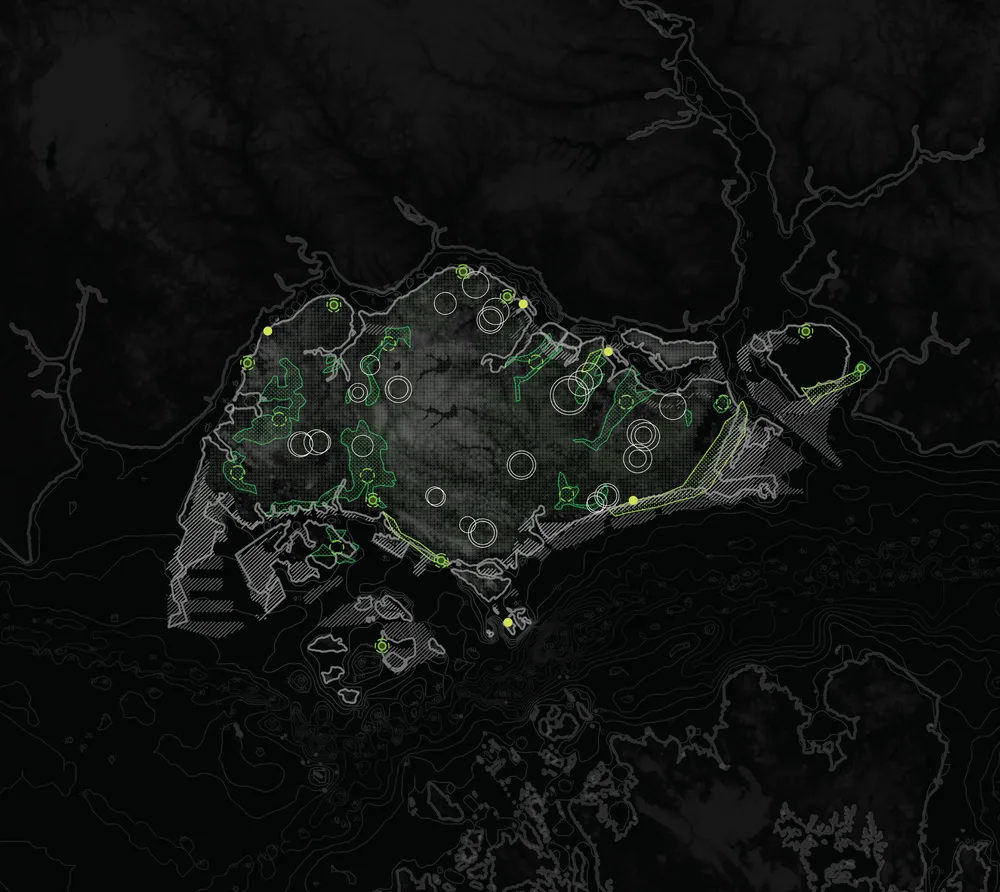
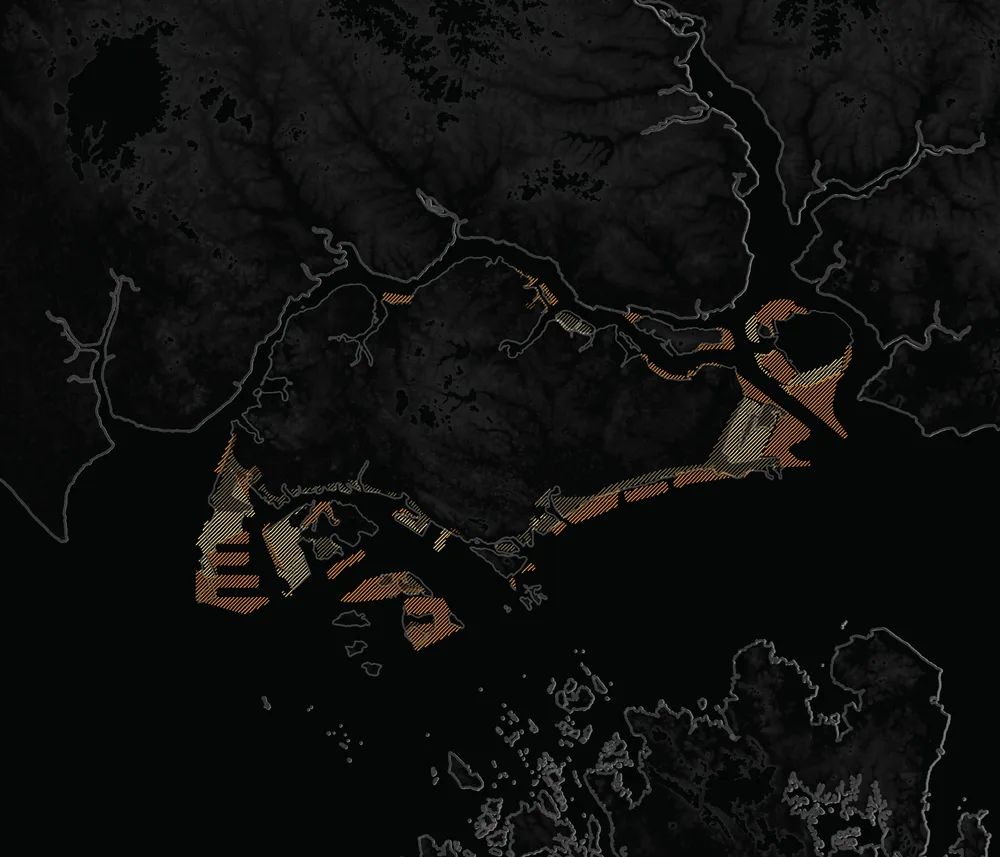
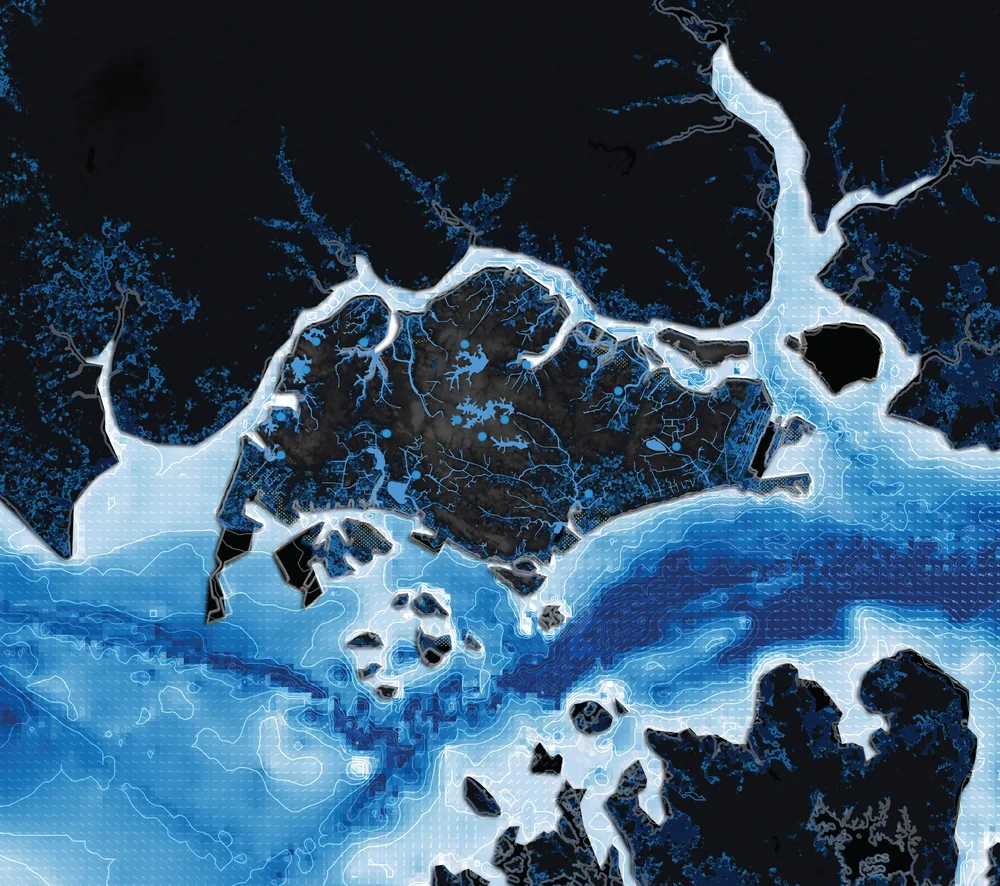
The need is growing. Around a third of Singapore lies less than five metres above mean sea level. Average sea levels could rise by up to 1.15 metres by the end of the century — and as high as four to five metres when extreme high tides meet storm surges. Stronger, more energetic waves could place greater pressure on vulnerable stretches of shoreline, including areas affected by coastal erosion, in a dense city with little room to retreat.
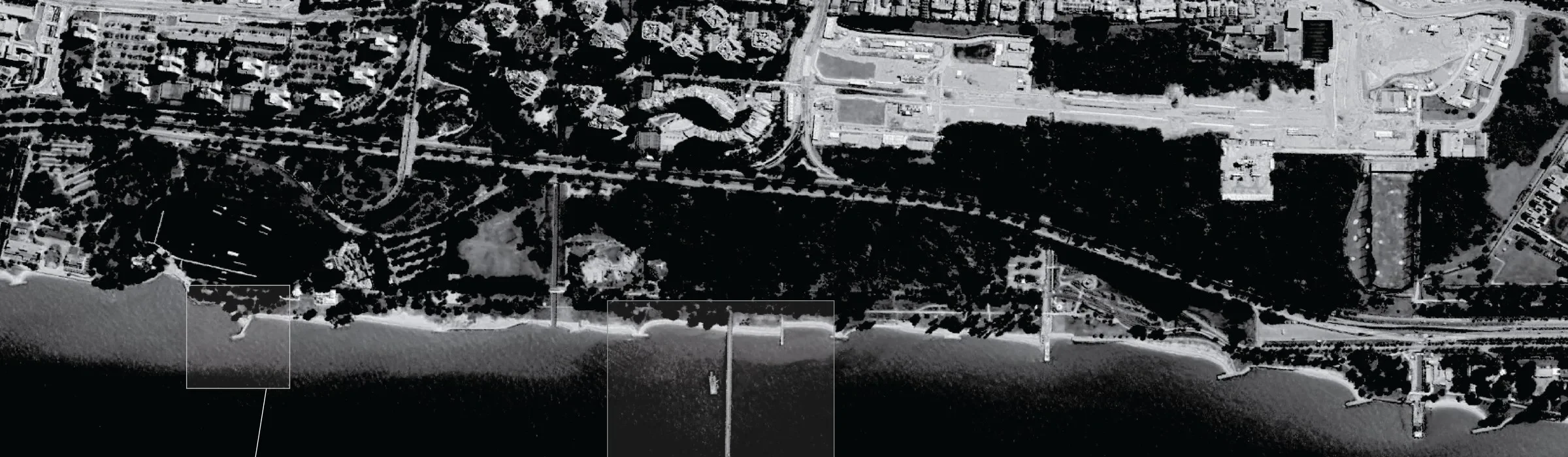
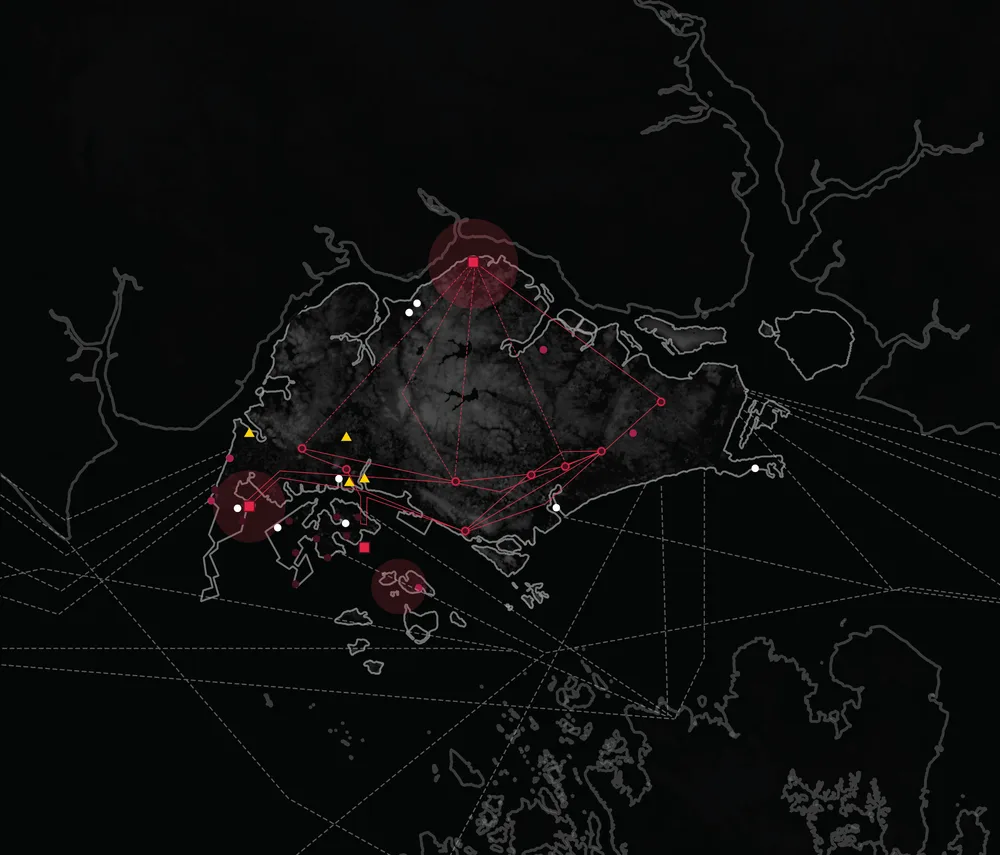
Yet the coast is not only ours to protect. Today around 65% of Singapore's shoreline is made up of seawalls (Tan et al., 2023). Along its edges a hidden world persists — oysters, snails, crabs, corals and seagrass, quietly overlooked by the grey defences built to hold the line. S.H.I.E.L.D imagines a reef that could help reduce wave energy reaching the shoreline, while giving marine life somewhere to settle, feed and grow: a defence that works with the sea rather than against it.
The Reef System
Singapore University of Technology and Design (SUTD)
In collaboration with: Mlion Corporation | Witteveen+Bos South-East Asia | HSL Constructor
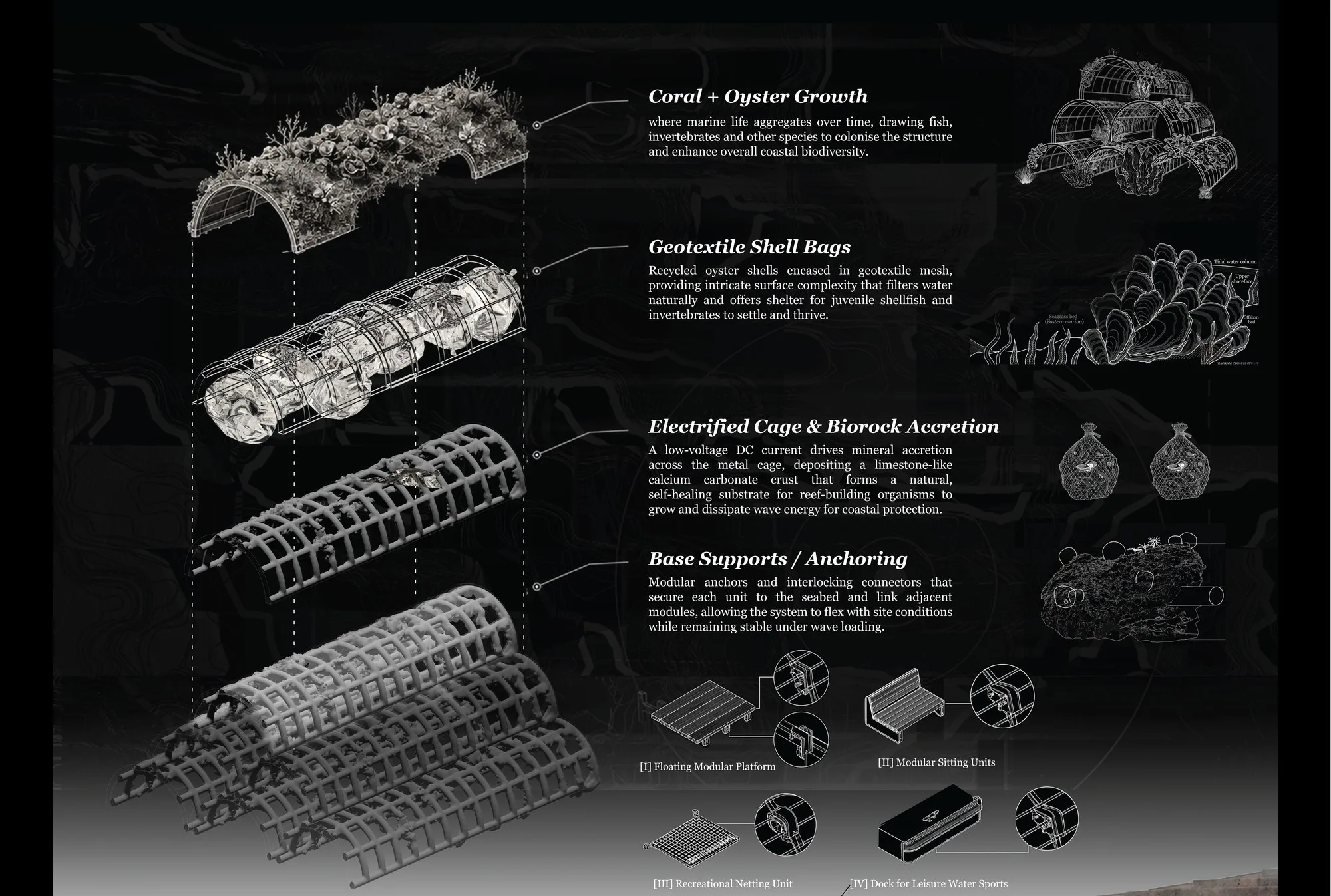
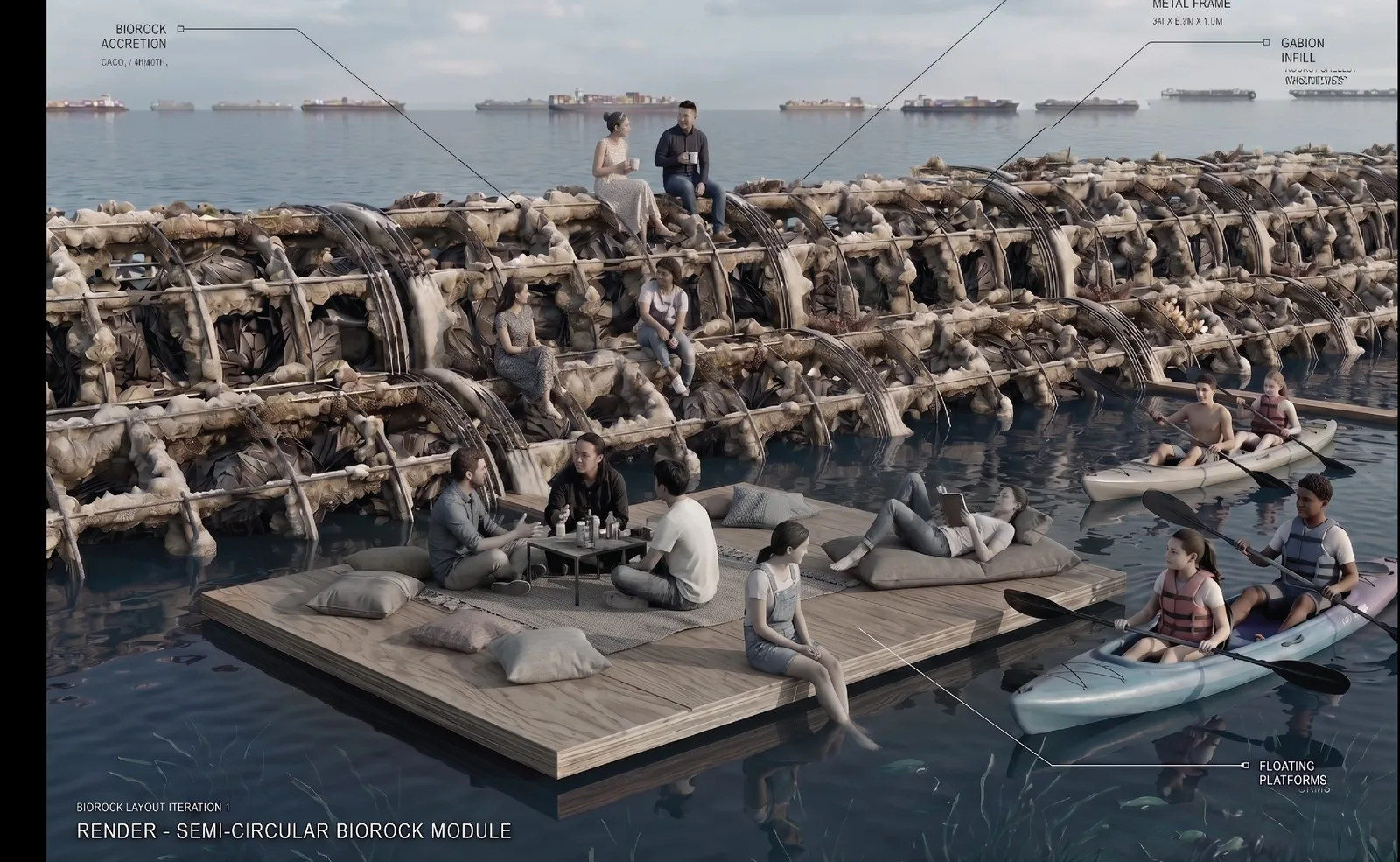
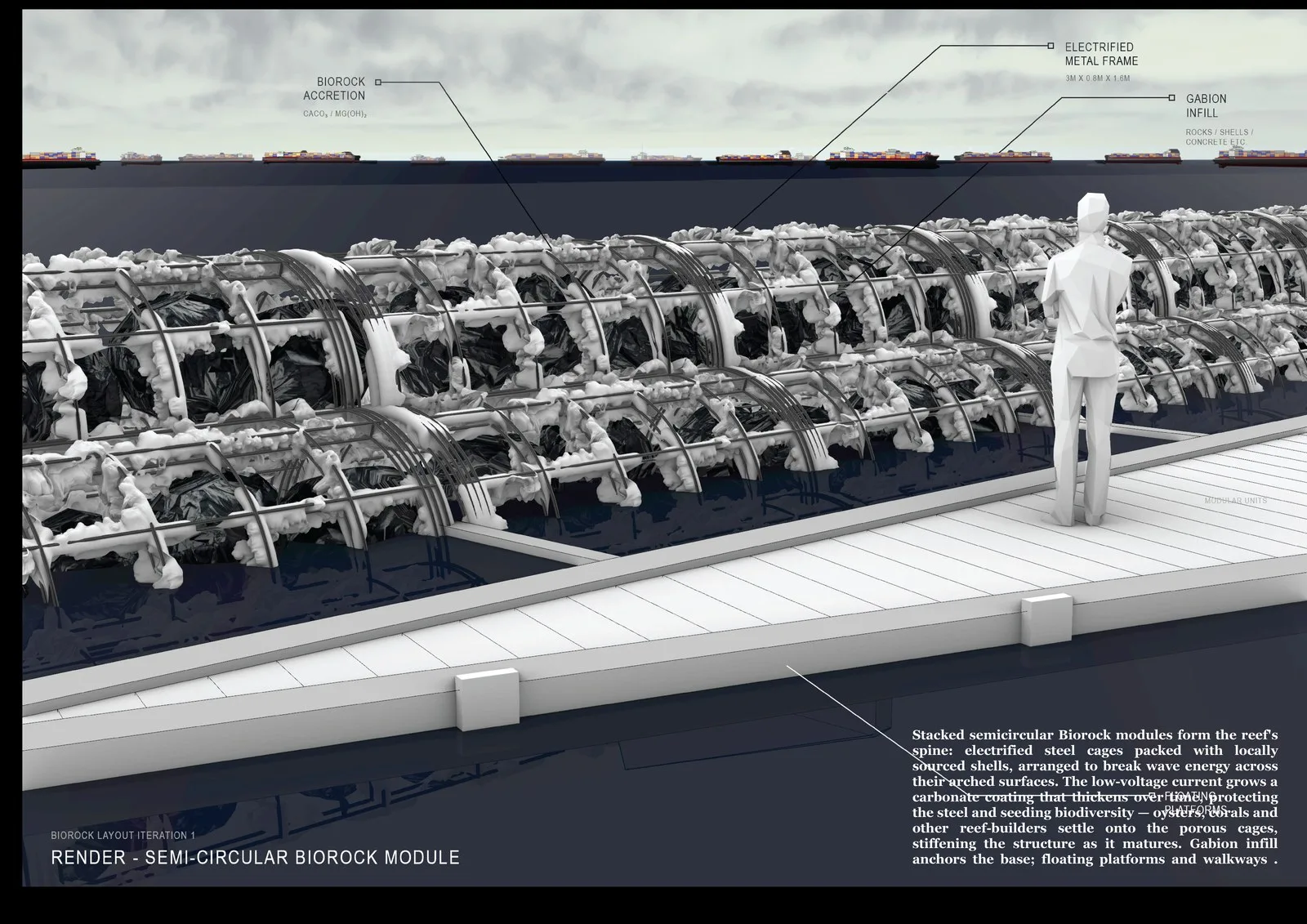
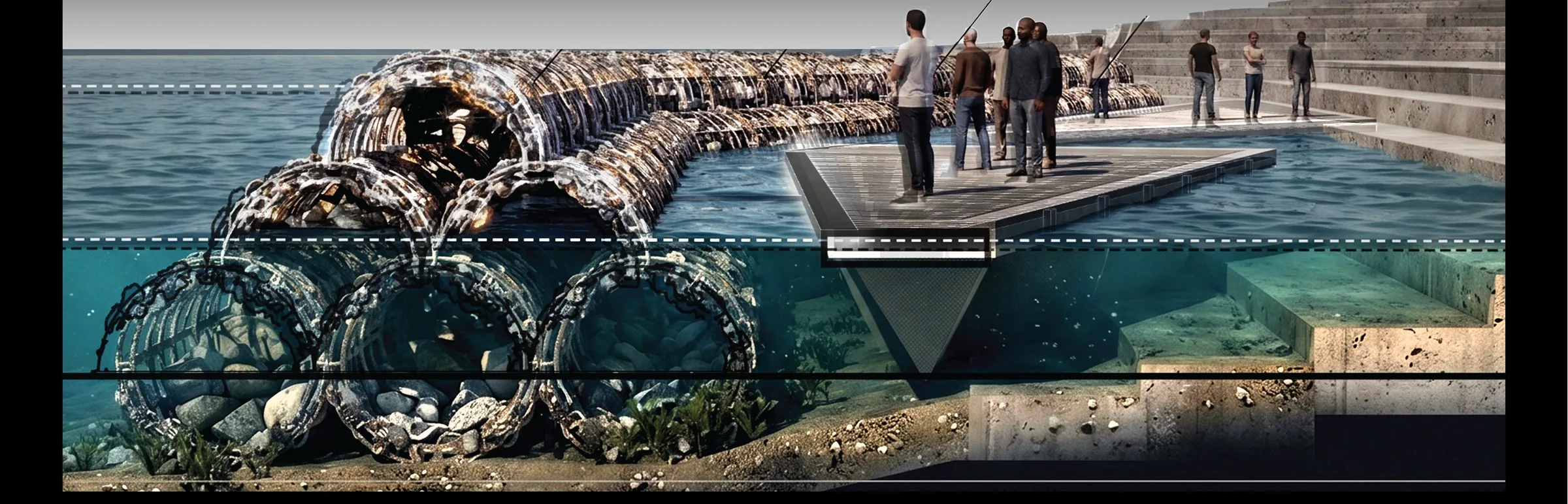
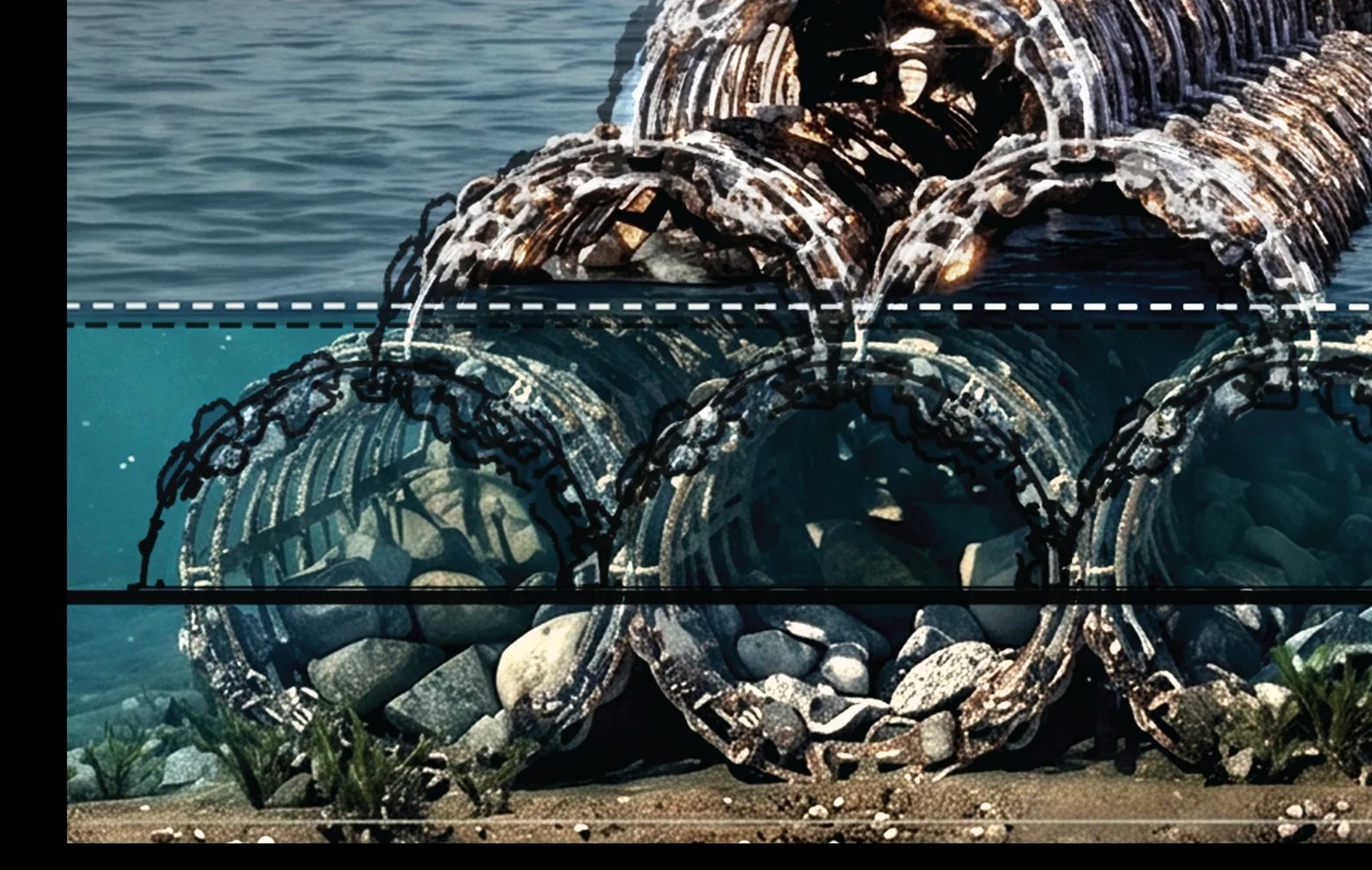
The reef is built from what the city throws away. Oyster, mussel and cockle shells from local restaurants are gathered into biodegradable mesh and packed into modular steel cages. Over time, marine life cements the shells together and the mesh quietly dissolves, leaving a structure that is held together by growth.
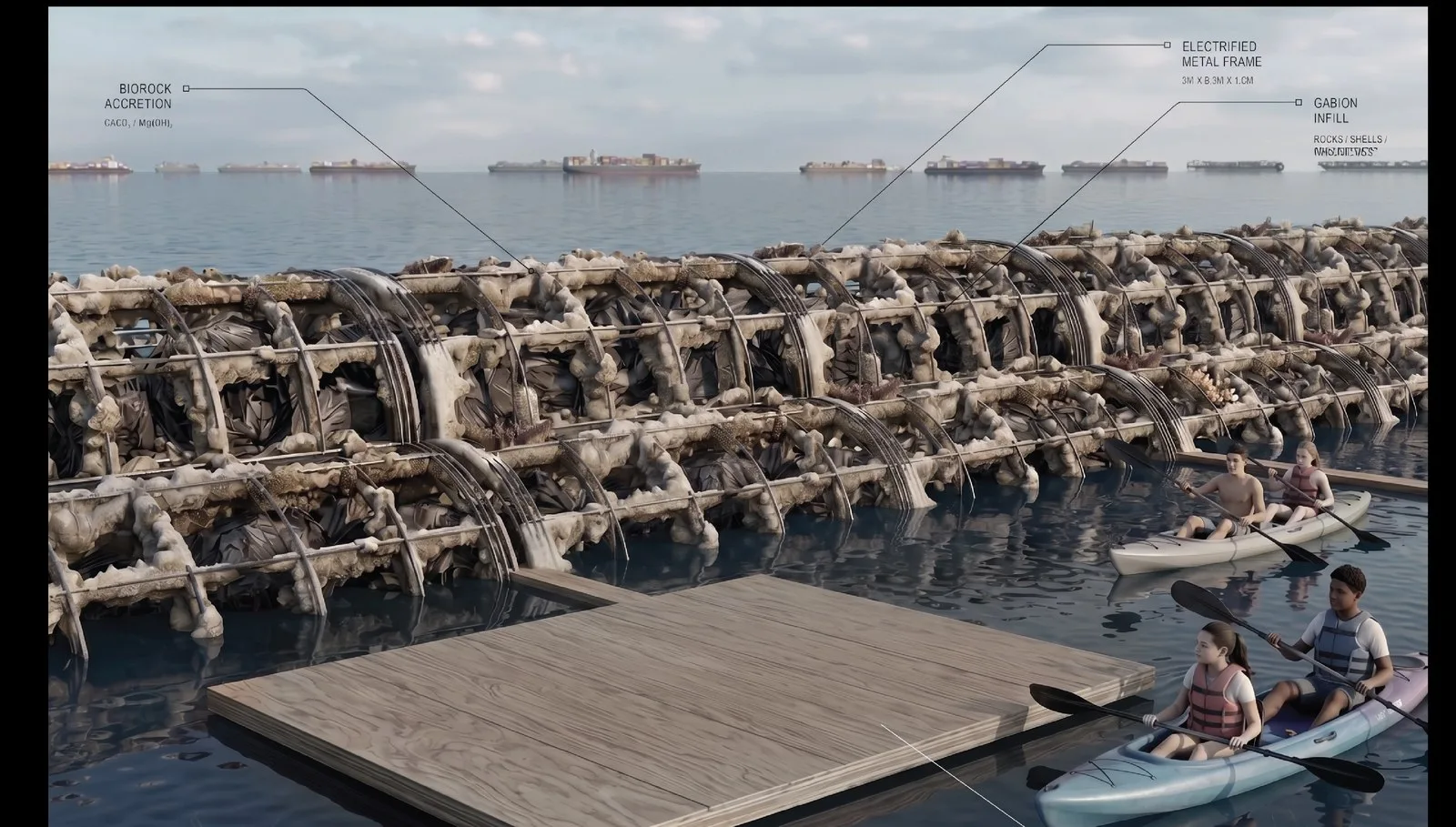
A gentle electric current runs through the steel — a technique known as Biorock. It draws minerals out of the seawater and wraps the frame in a living limestone skin that protects it from corrosion, strengthens it year after year, and quickens the arrival of corals, oysters and the creatures that follow them.
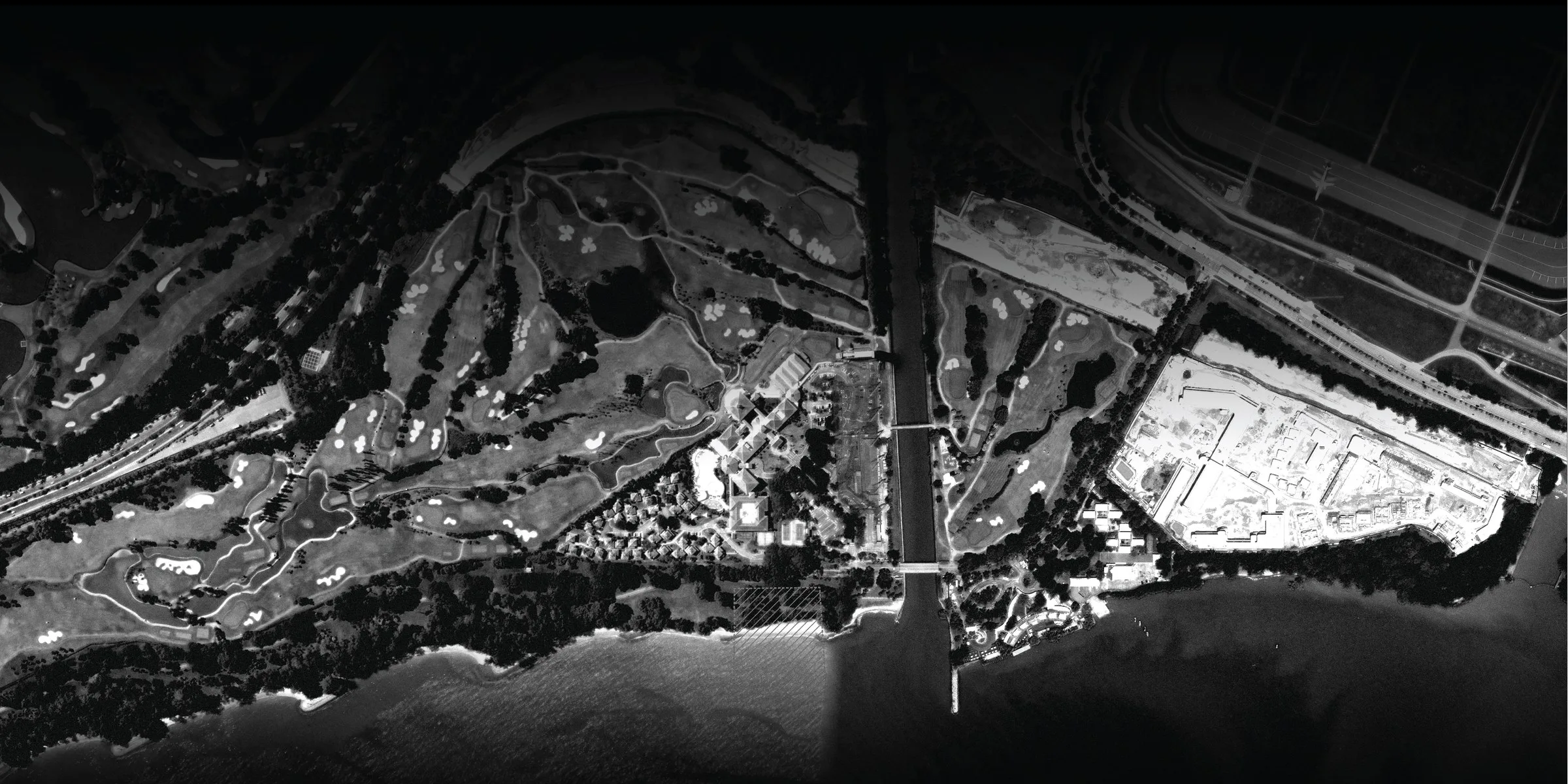
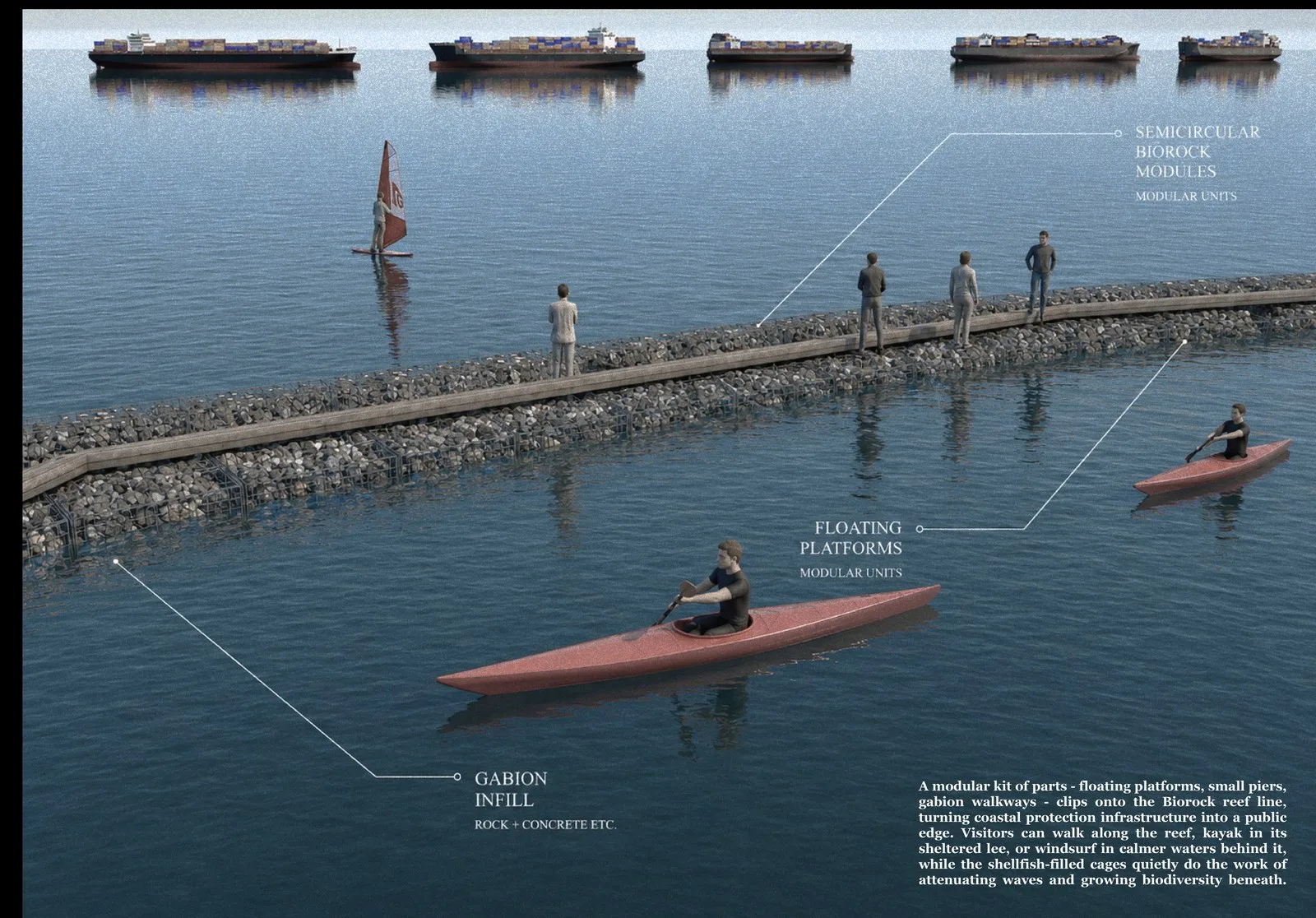
Set in the intertidal zone, the modules are submerged at high tide and surface at low, forming a living breakwater along the shore. A kit of parts — floating platforms, small piers, floating gardens — can be clipped onto the reef, so that the same structure that shelters the coast also becomes somewhere to sit, swim, paddle and look.
Shellforce — The Community Layer
The reef cannot be built without shells, and the shells come from the city. Shellforce is the community programme that feeds it: shells collected from restaurants, washed, laid out to dry in the sun until they are clean, then bagged and packed by many hands before they are carried out to sea.
This is a design decision, not an afterthought. Because the reef is made from simple materials and everyday waste, anyone can take part — in gathering shells, in building modules, in watching the reef come alive. It turns a piece of coastal infrastructure into something a neighbourhood helps make, and comes to own.